Grades K–8 · Brain break
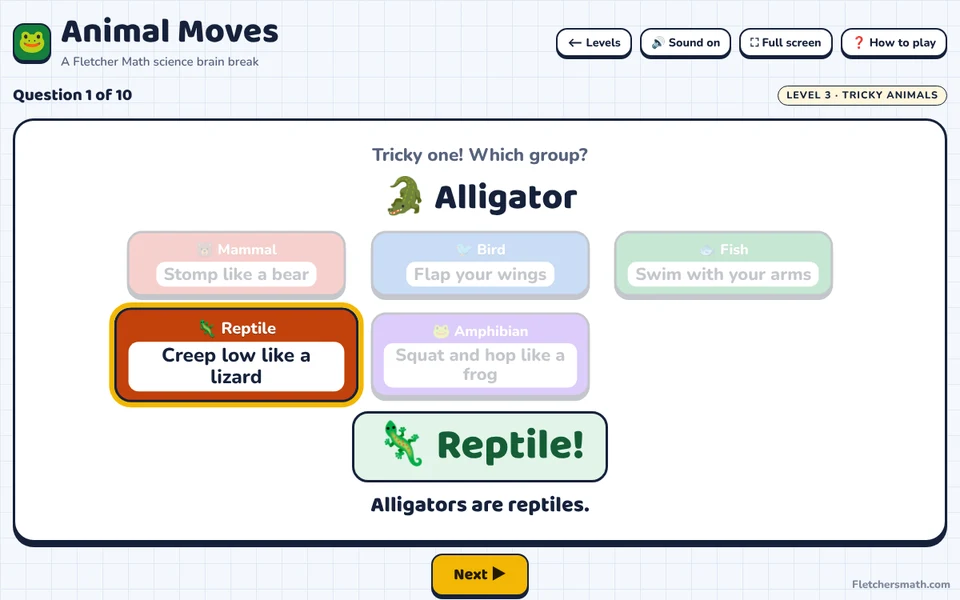
Animal Moves
An animal or a clue appears. Students move like its animal group: stomp, flap, swim, creep or hop.
19 multiplayer classroom games and 8 virtual labs for 5th grade science. The games play on one shared screen and the labs run on each student's device. No student logins, works offline, and every one has a free demo you can try right now.
An animal or a clue appears. Students move like its animal group: stomp, flap, swim, creep or hop.
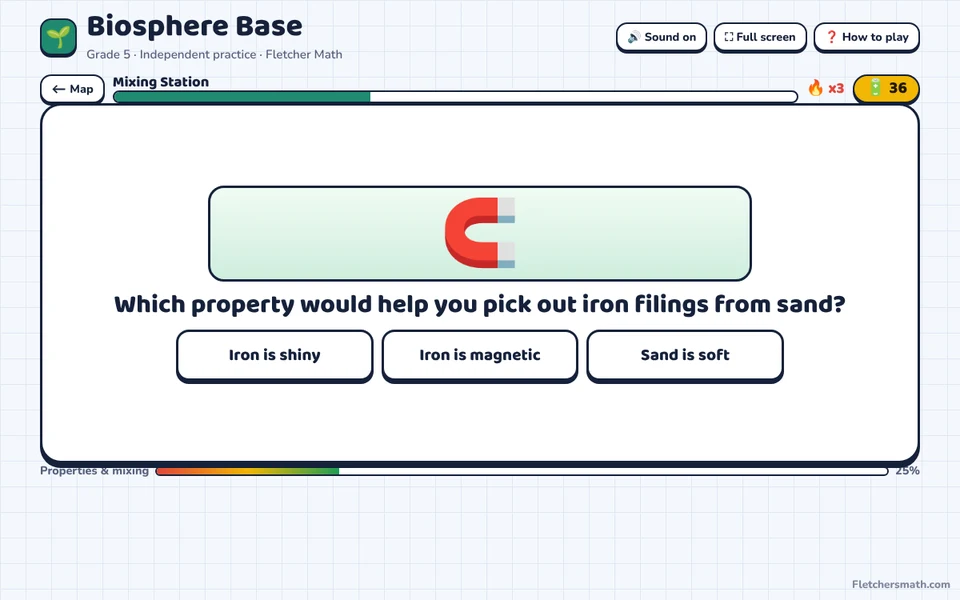
A single-player science game for 5th grade. Run a science station: conservation of matter, mixtures and new substances, food webs and decomposers, gravity, shadows and star patterns, and Earth's spheres, then finish with a skills report for six 5th grade NGSS standards.
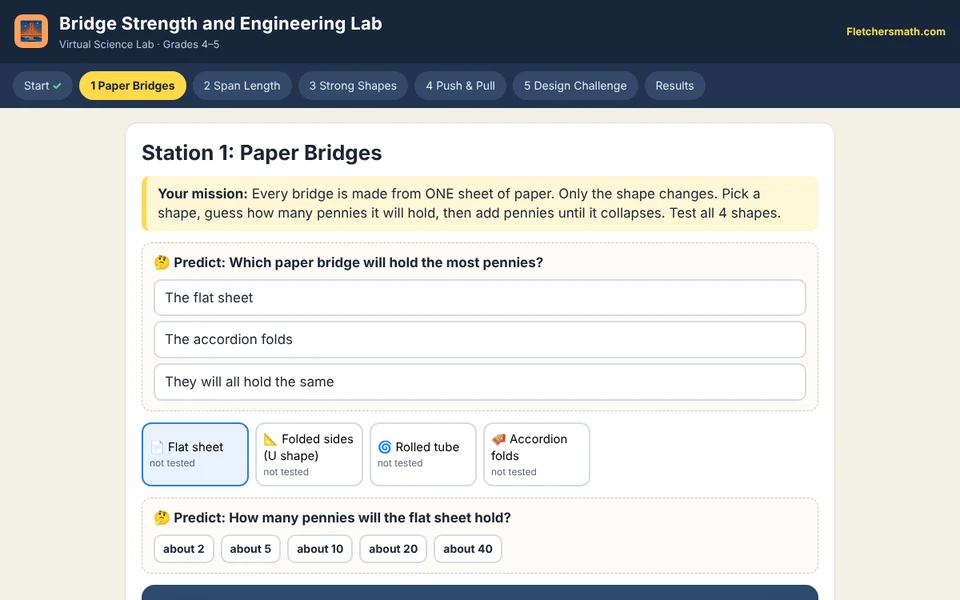
Students fold paper bridges, test spans and frames, map bridge forces and design a bridge on a budget.
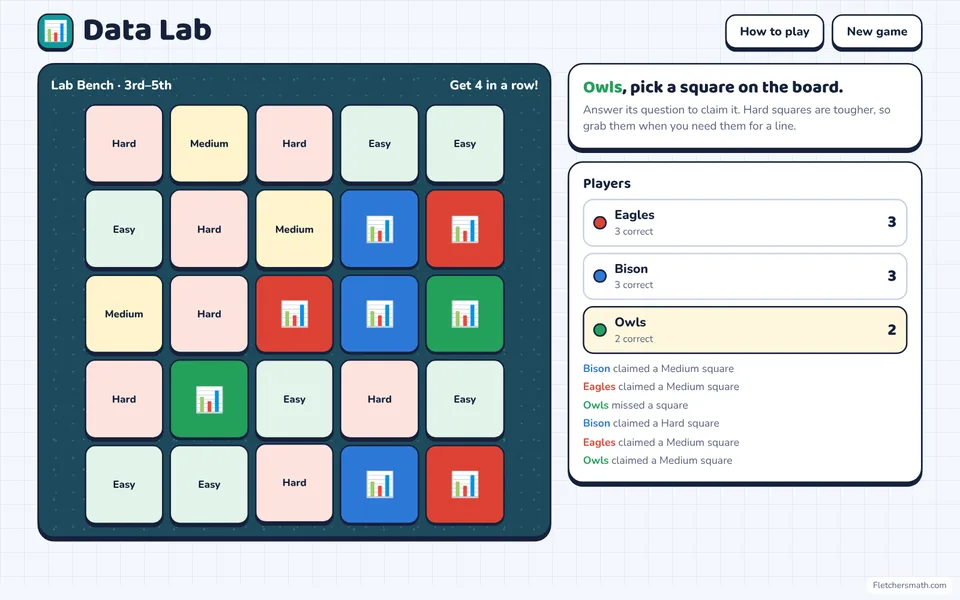
Variables, fair tests, tables, graphs, mean and median, and claims backed by data.
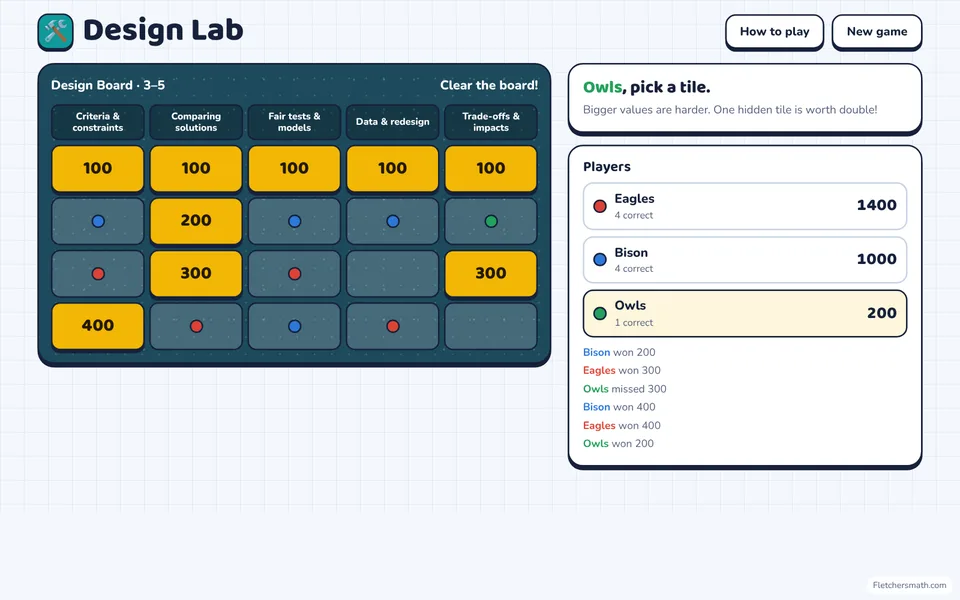
The engineering design process: criteria and constraints, fair tests, using data to improve designs and trade-offs.
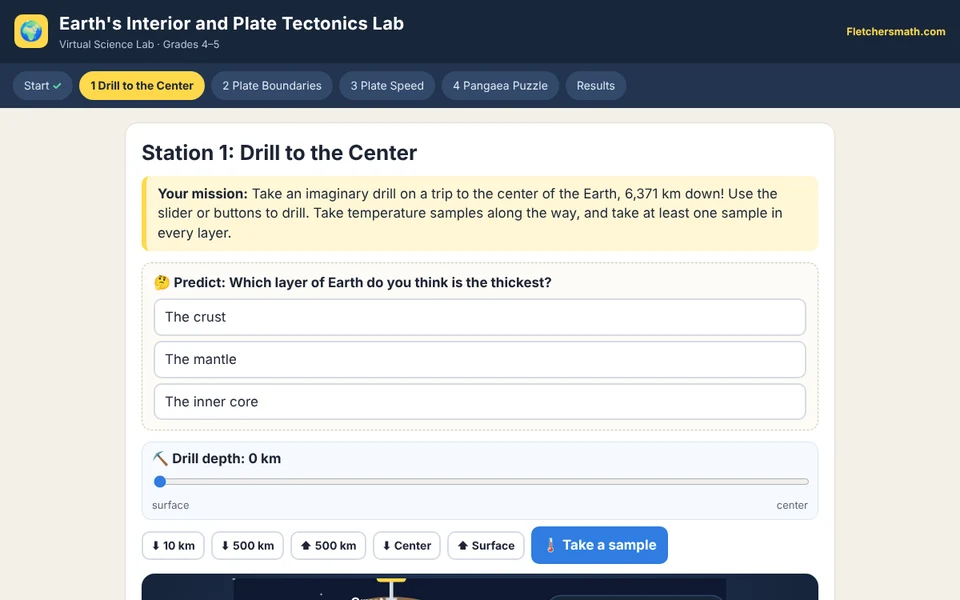
Students drill to Earth's center, watch plate boundaries over time, measure plate speed and fit Pangaea back together.
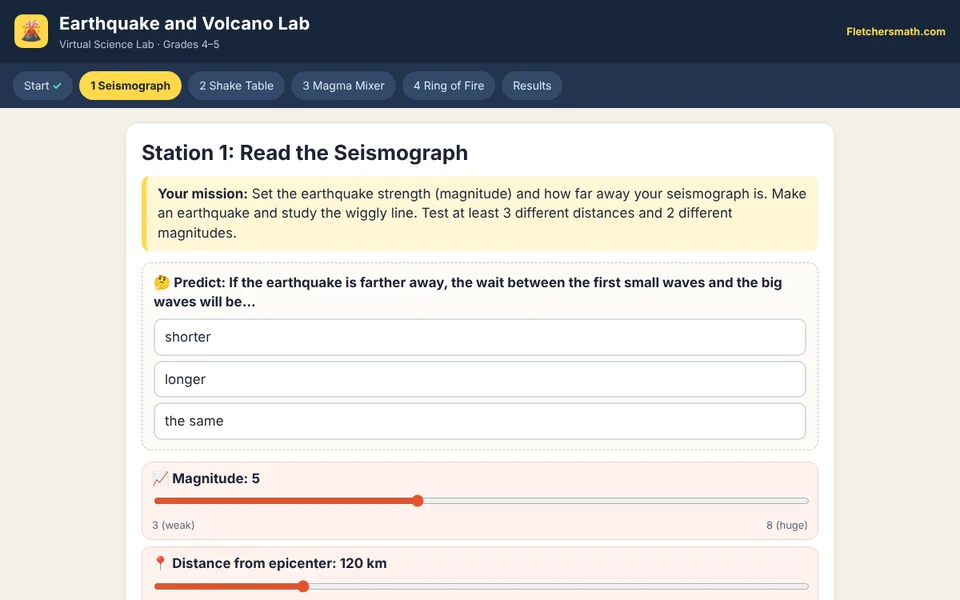
Students read seismographs, test buildings on a shake table, mix magma to build volcanoes and map the Ring of Fire.
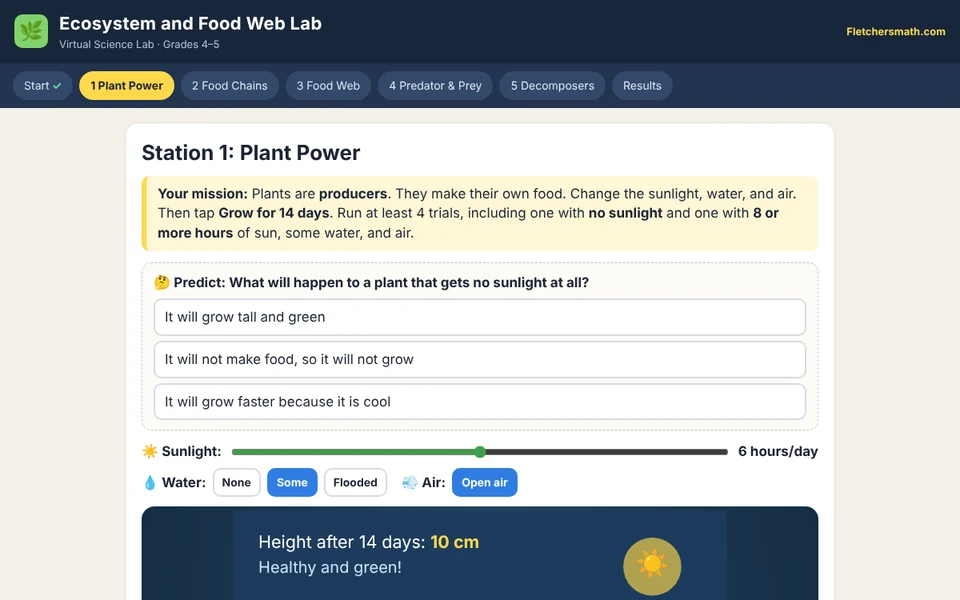
Students grow plants, build food chains, change a food web, run predator–prey trials and test decomposers.
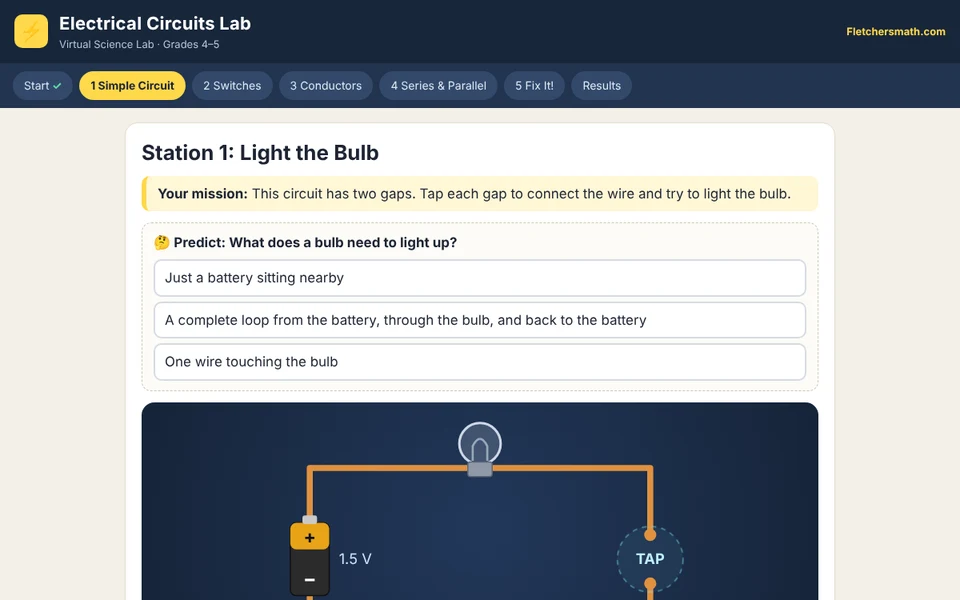
Students light a bulb, use a switch, test conductors, compare series and parallel circuits and fix broken circuits.
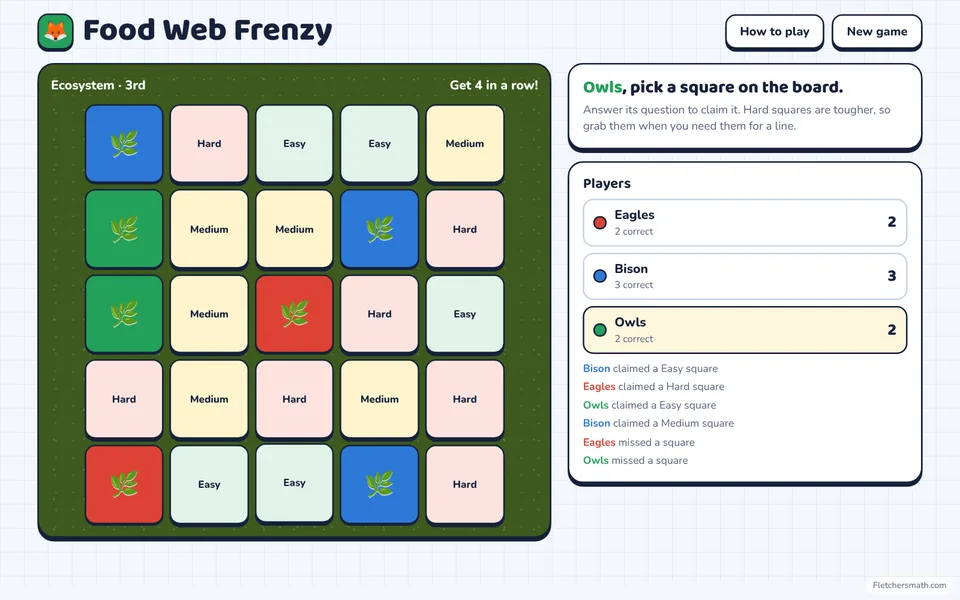
Producers, consumers, decomposers, food webs and adaptations. Claim the ecosystem four in a row.
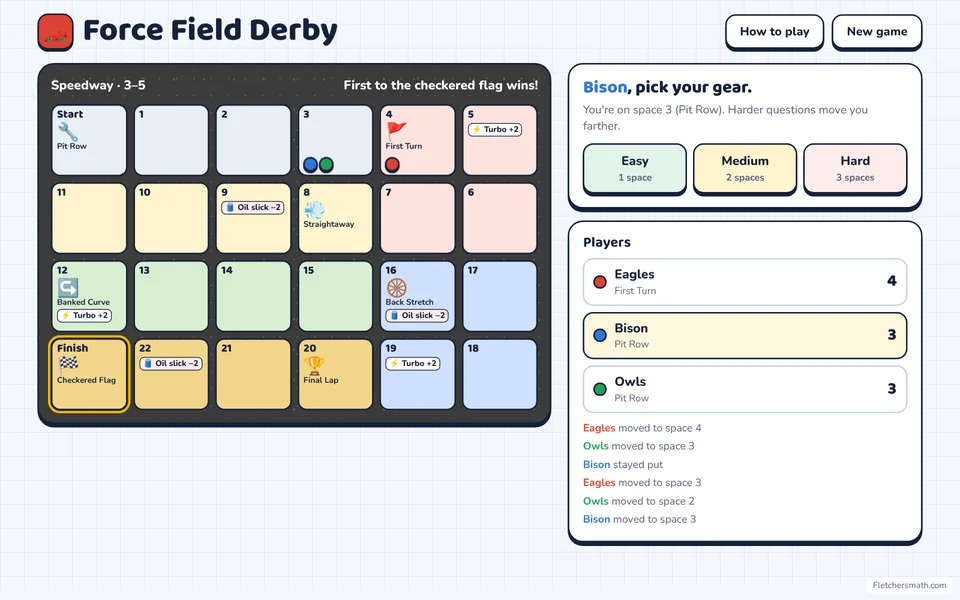
Forces and motion, Newton’s laws, gravity, energy, momentum and waves on a speedway.
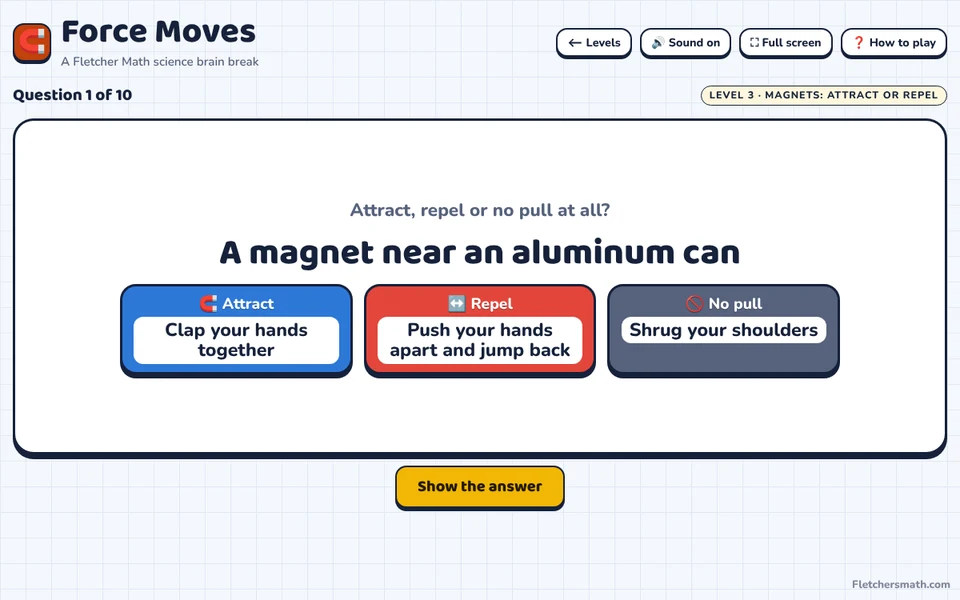
A force or energy card appears. Students act out push or pull, attract or repel, forms of energy or Newton's laws.
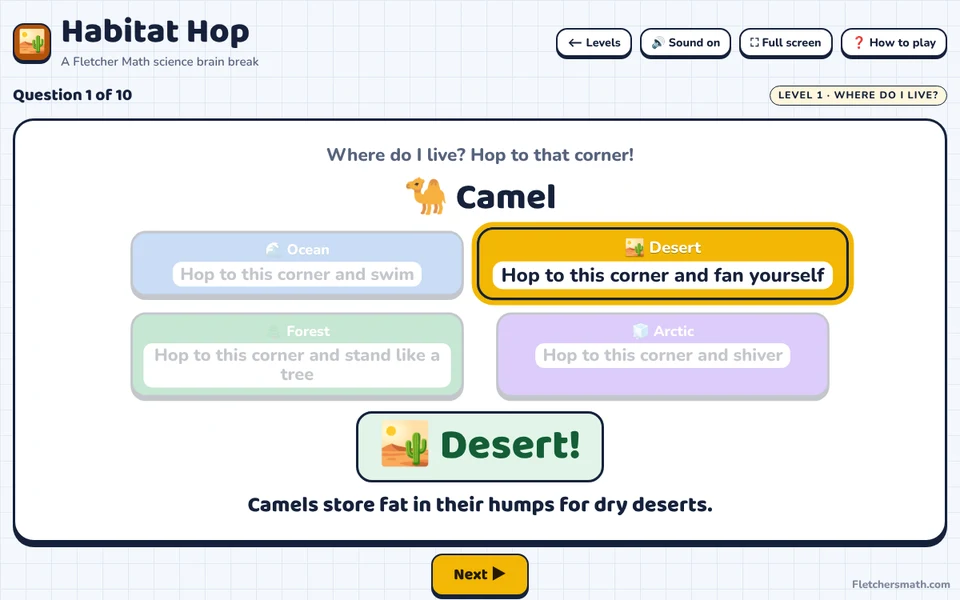
An animal, plant or clue appears. Students hop to the corner of the room for the habitat where it lives.
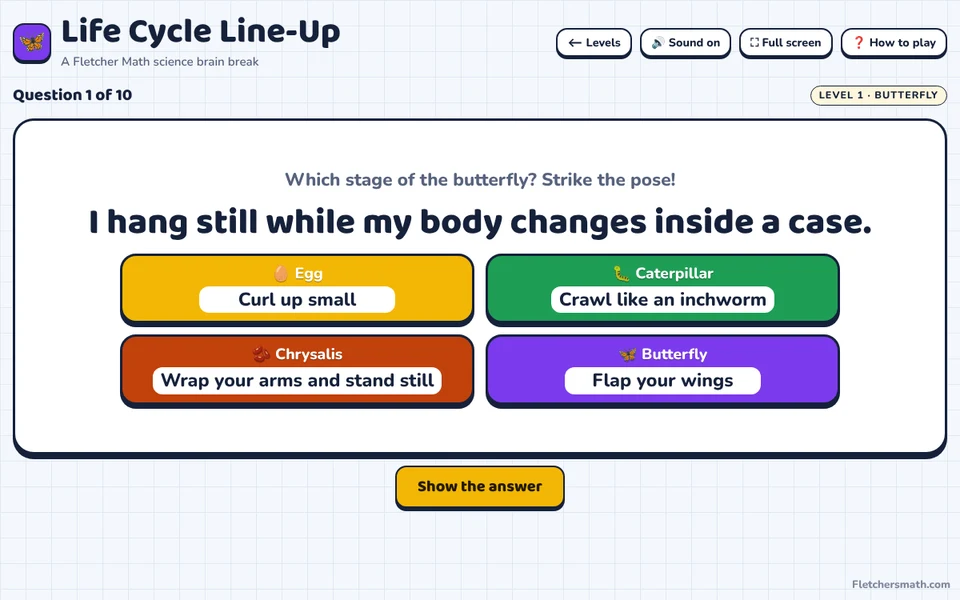
A life cycle clue appears. Students strike the pose for that stage of a butterfly, frog, plant or grasshopper.
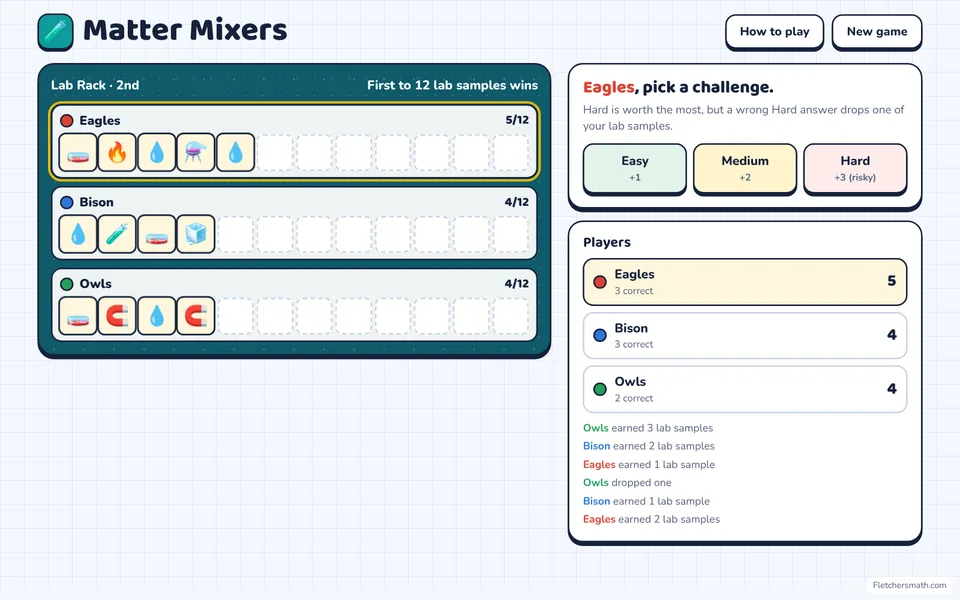
Properties of matter, physical and chemical changes, particles and conservation of mass.
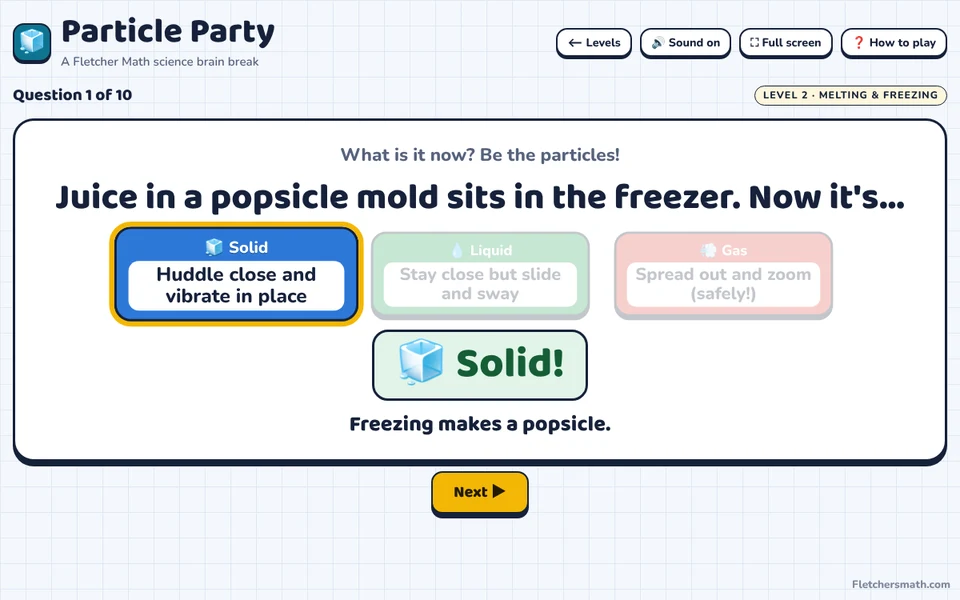
Students act out the particles. Huddle and vibrate for a solid, slide and sway for a liquid, spread out and zoom for a gas.
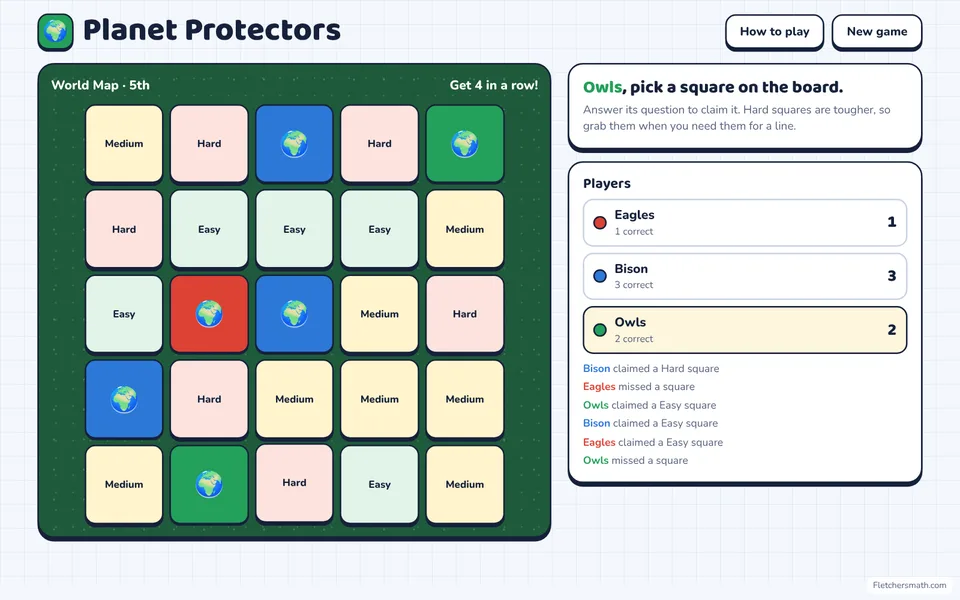
Natural resources, hazards, human impact and climate. Protect four regions in a row.
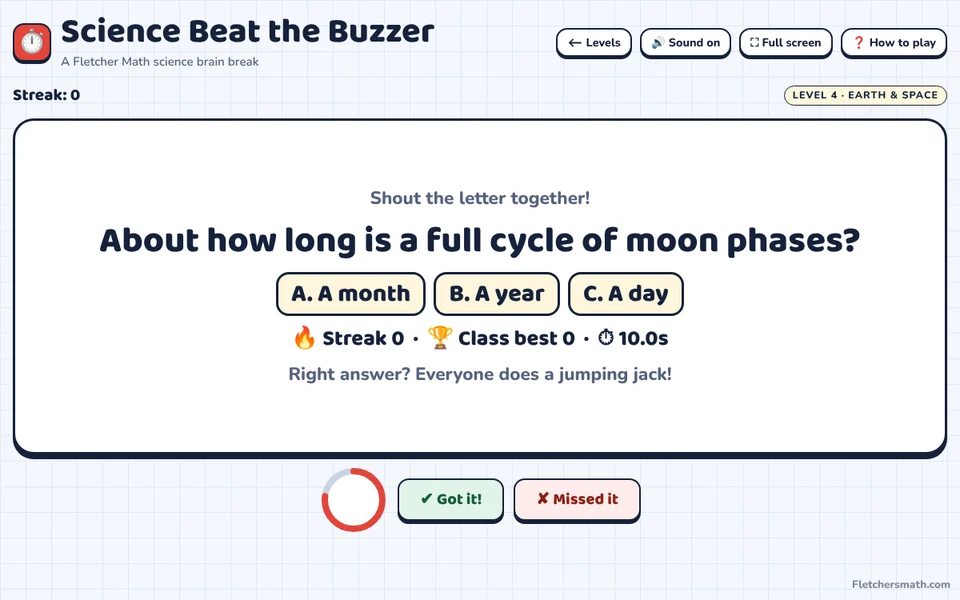
The class shouts the letter of the right answer to build a streak before the buzzer. Every right answer makes the clock a little faster.
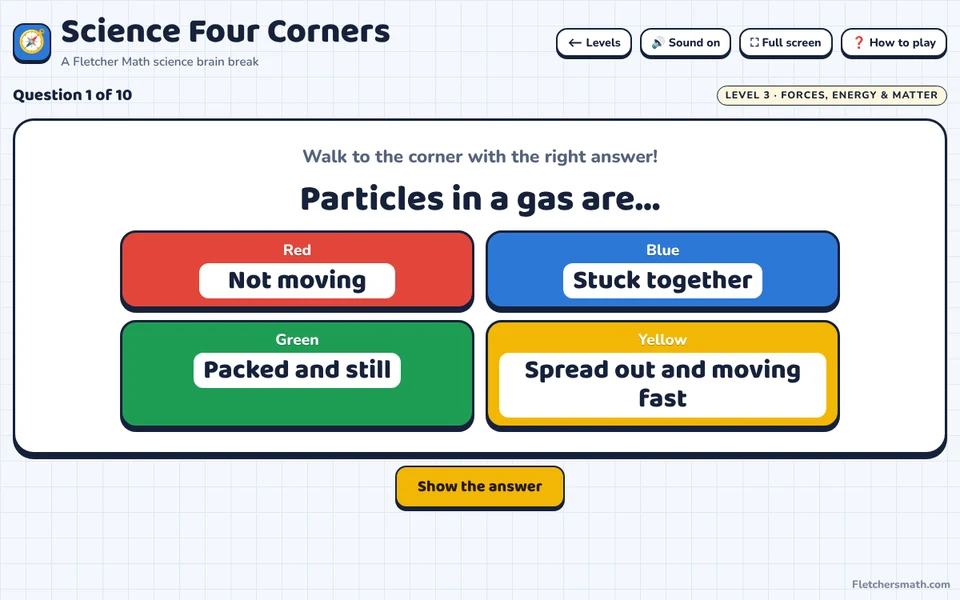
A science question appears with four answers, one for each corner of the room. Students walk to the corner they think is right, then the answer lights up.
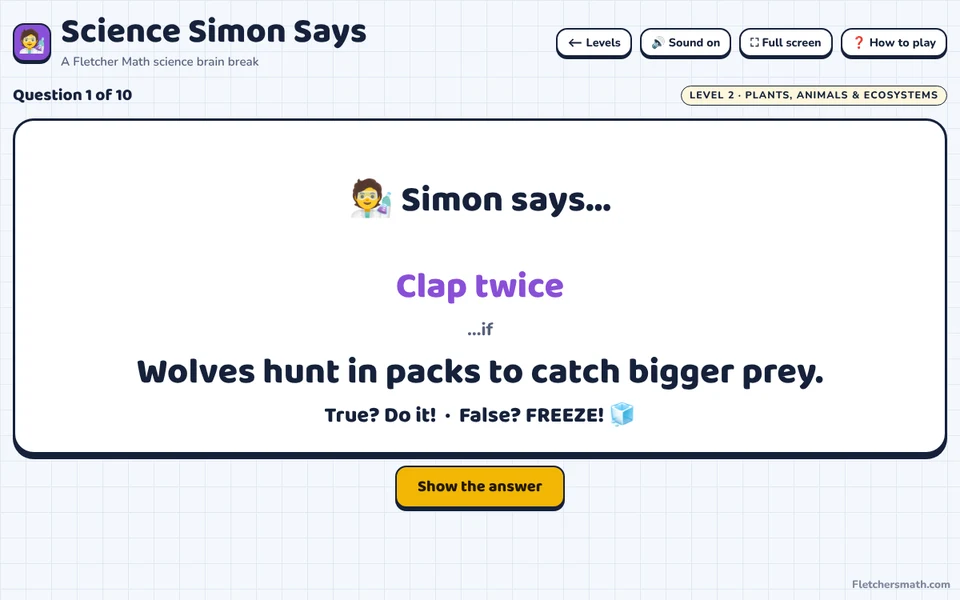
Simon says buzz like a bee if plants need sunlight to grow! Students do the move only when Simon says it and the science is true.
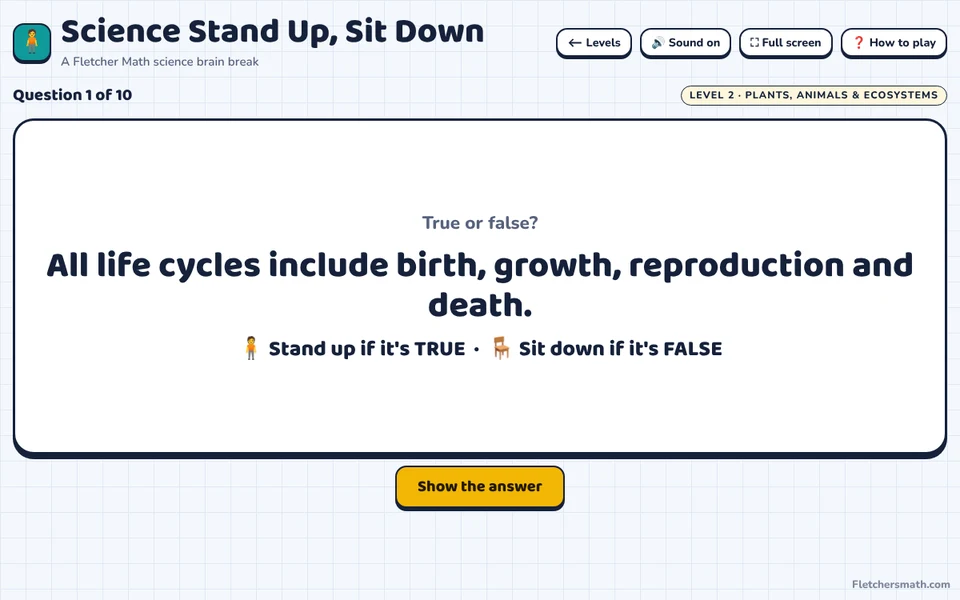
A science statement appears on the screen. Students stand up if it's true and sit down if it's false, then the answer and the real science pop up.
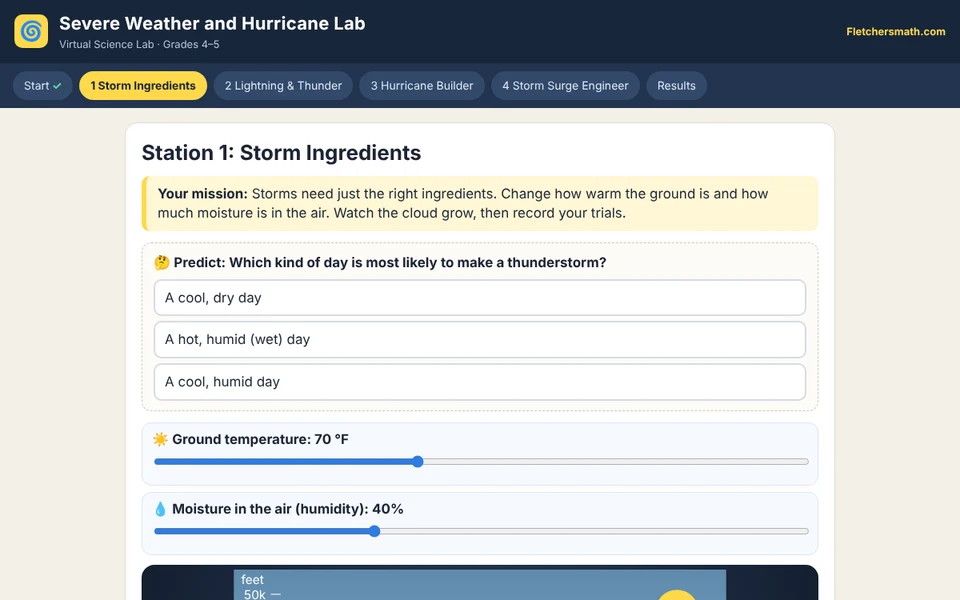
Students build storms, time lightning to find its distance, power up hurricanes and design homes that stay dry.
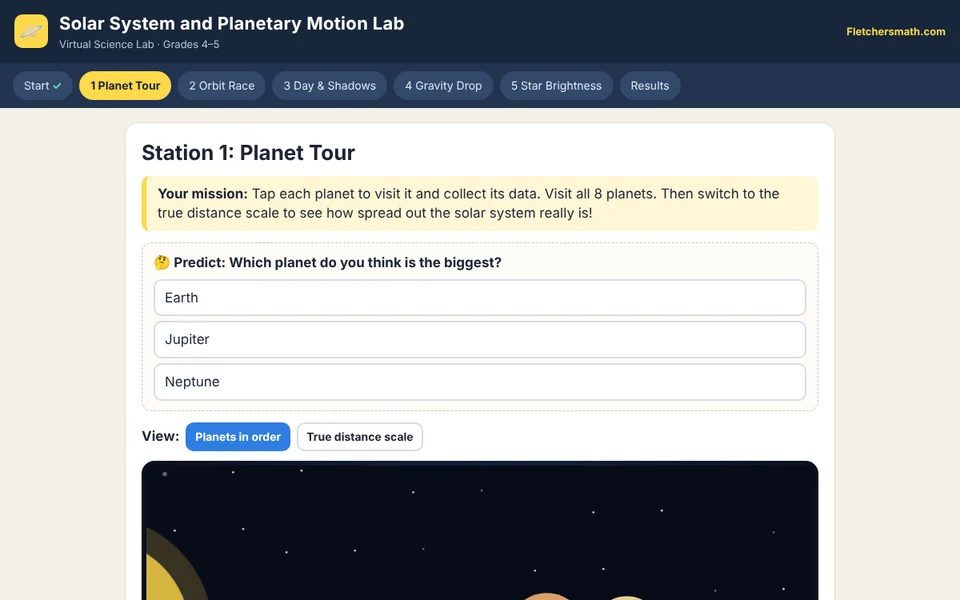
Students tour planets, race orbits, track shadows, drop balls on other worlds and measure star brightness.
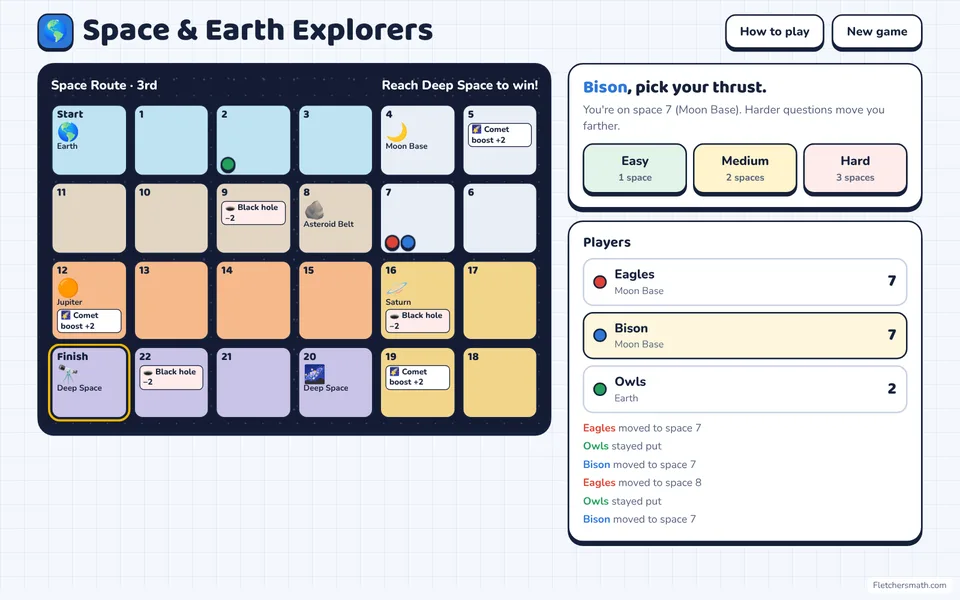
Weather and climate, rocks and fossils, erosion, the sun, moon and stars on a trip across the solar system.
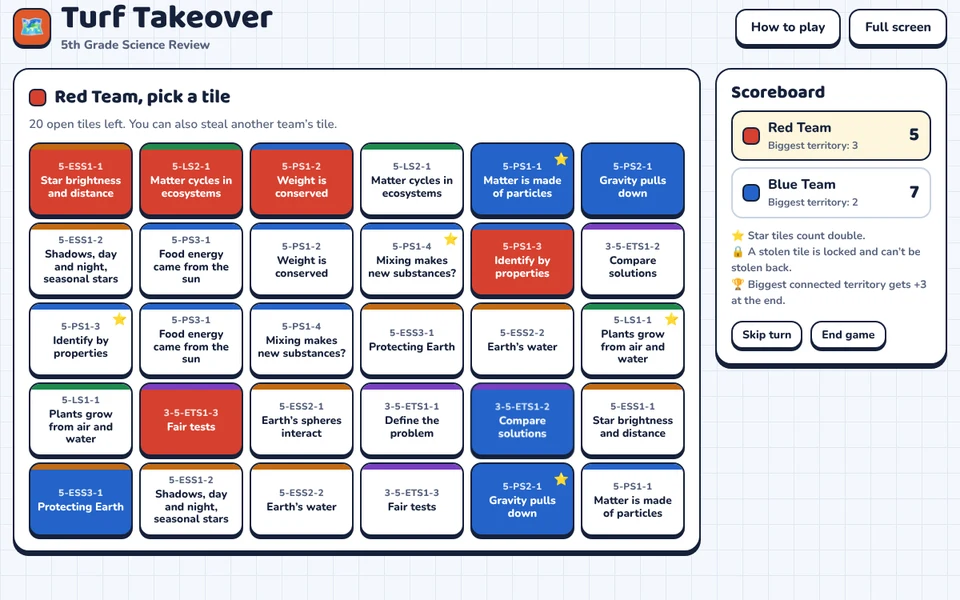
A team review game for every NGSS 5th grade science standard. Teams claim tiles on a map by answering questions, and can steal each other's tiles. Play a full review or pick the standards you want. The results show % correct for each standard.
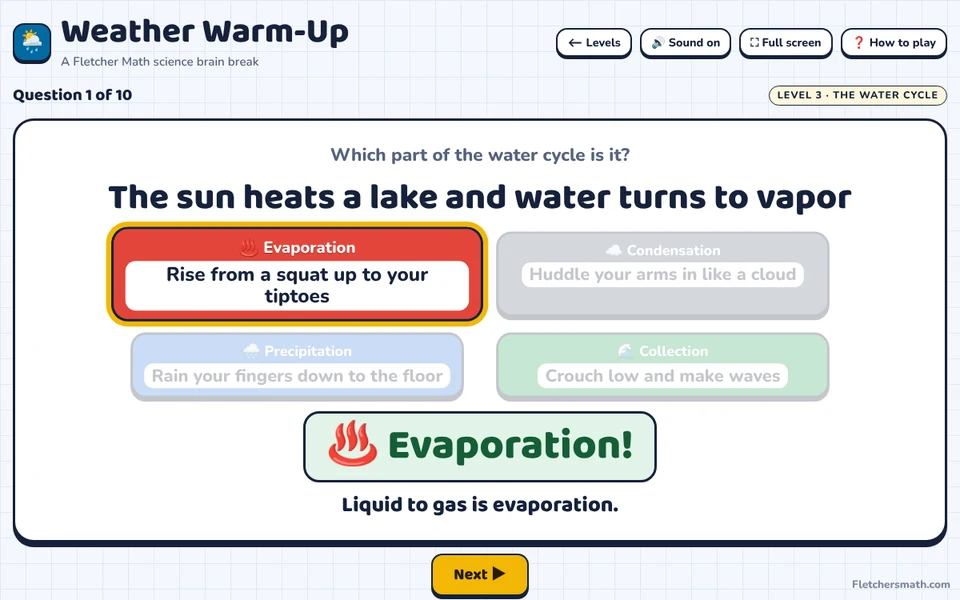
A weather card appears. Students act out sunny, rainy, windy or snowy, the water cycle, weather tools or weather fronts.
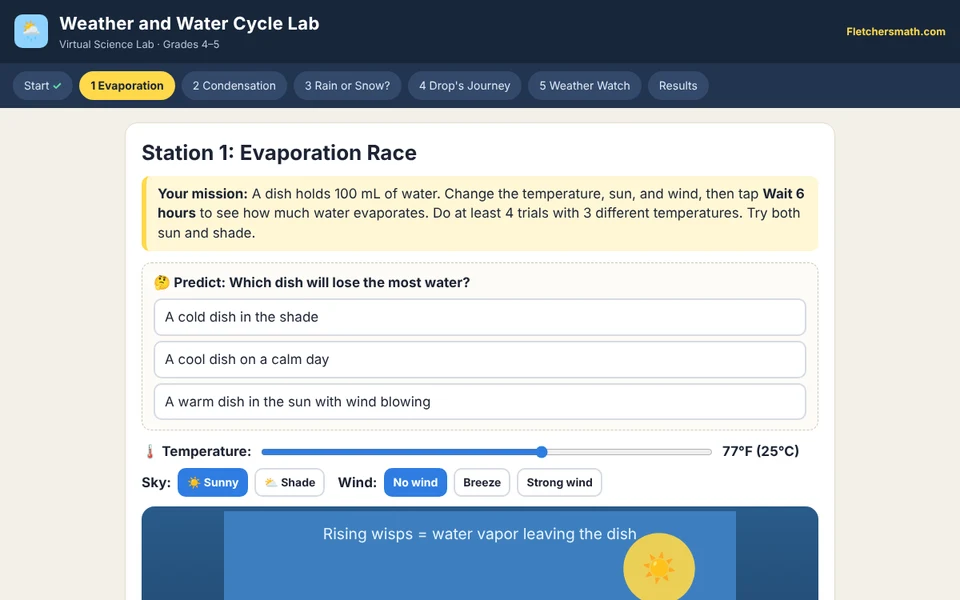
Students test evaporation and condensation, find four kinds of precipitation and forecast a week of weather.
The 5th Grade Classroom Bundle has 10 games, 3 brain breaks and 2 labs picked for this grade. The Grades 3–5 Classroom Kit has every product for Grades 3–5: 97 games, 20 brain breaks and 31 labs.
The All-Access Teacher License includes every game, every grade and all future games.
Browse all grades, topics and standards
Teach both subjects? See all of our math and science games by grade.