Grades 9–10 · Life Science
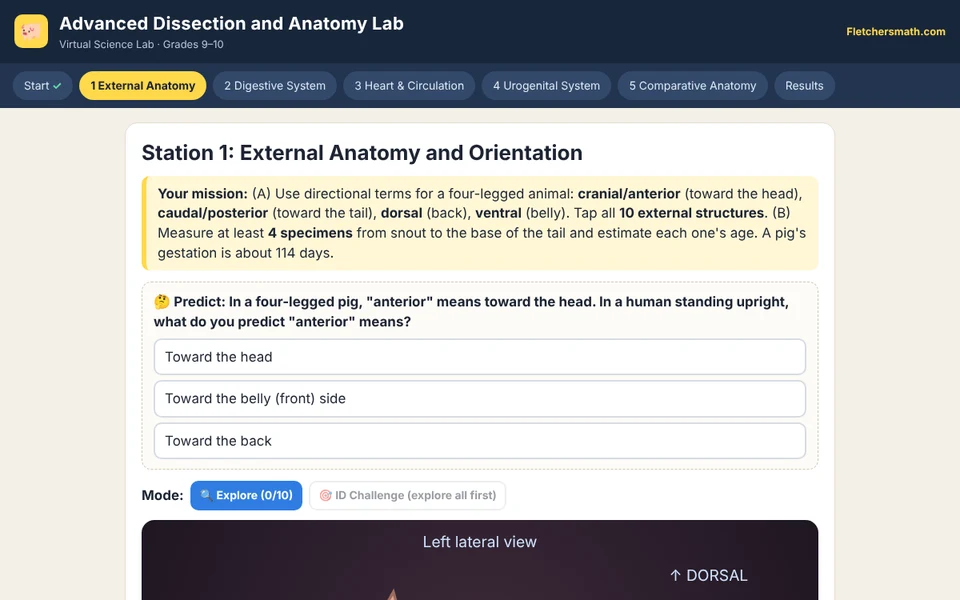
Advanced Dissection and Anatomy Lab
Students do a virtual, diagram-based fetal pig dissection and compare pig, human and frog anatomy.
12 multiplayer classroom games and 10 virtual labs for 9th grade science. The games play on one shared screen and the labs run on each student's device. No student logins, works offline, and every one has a free demo you can try right now.
Students do a virtual, diagram-based fetal pig dissection and compare pig, human and frog anatomy.
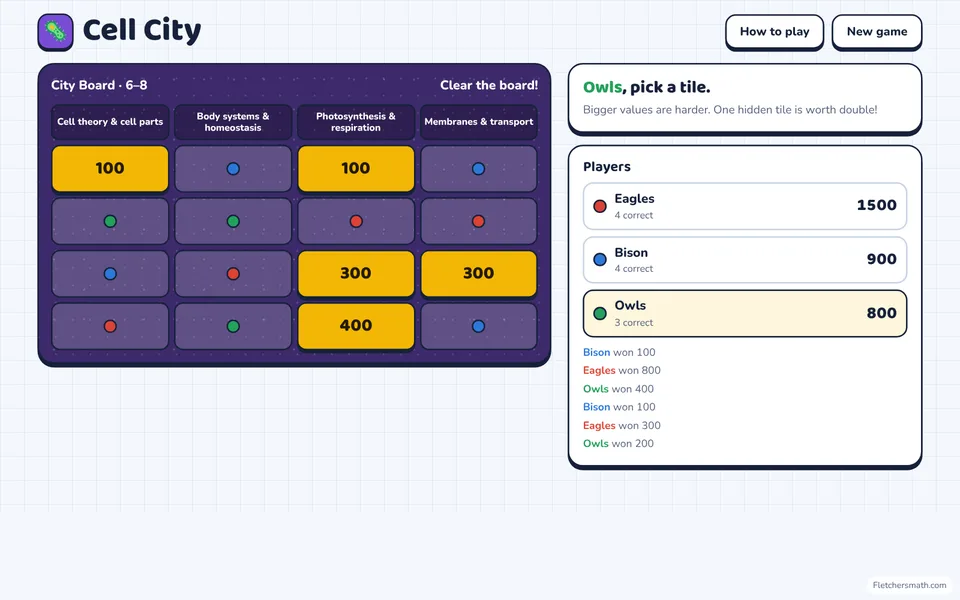
Organelles, body systems, photosynthesis, respiration, DNA and transport in a game-show city tour.
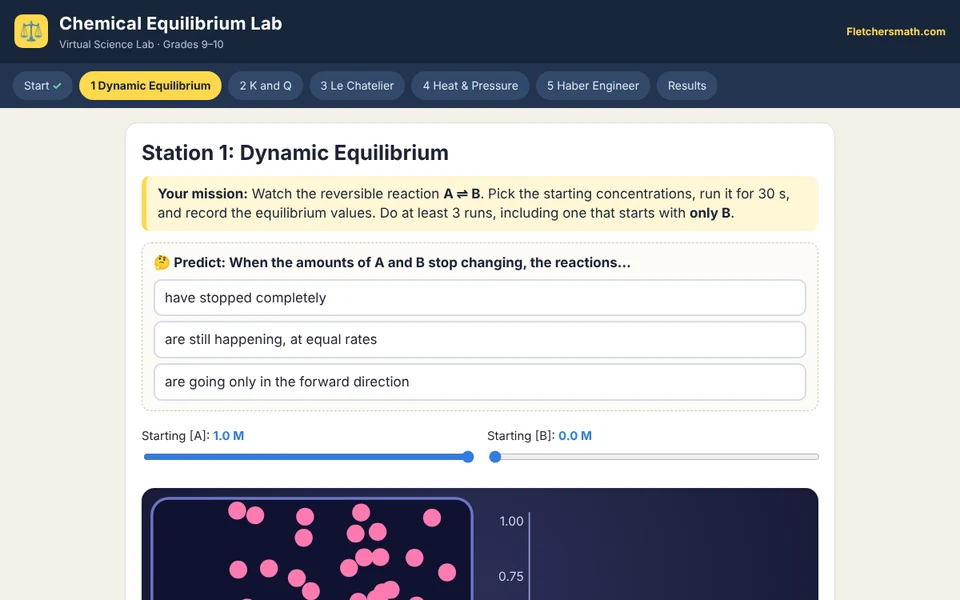
Students calculate K and Q, apply Le Chatelier stresses and choose conditions for an ammonia plant.
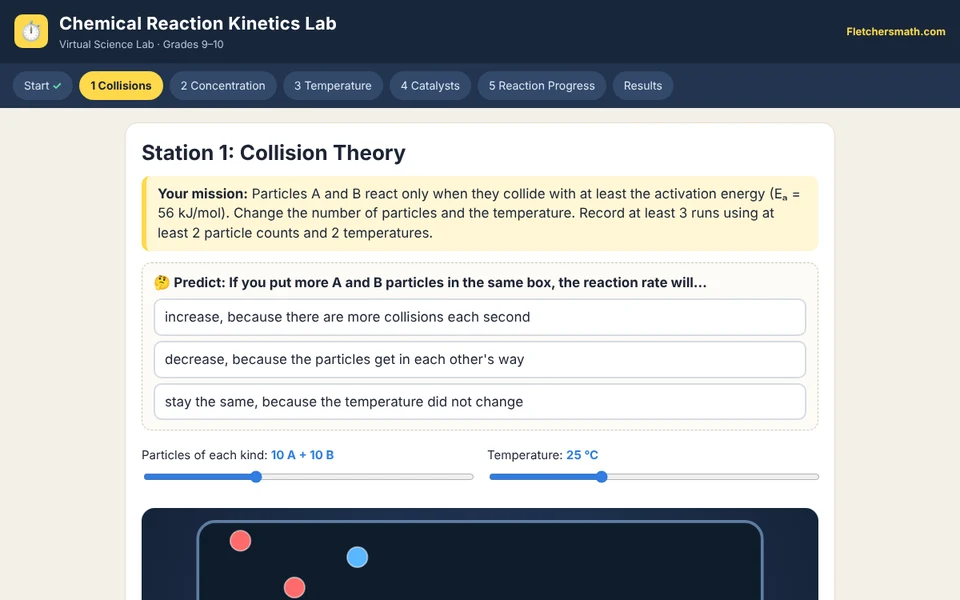
Students time a peroxide reaction to see how concentration, temperature and catalysts change rate.
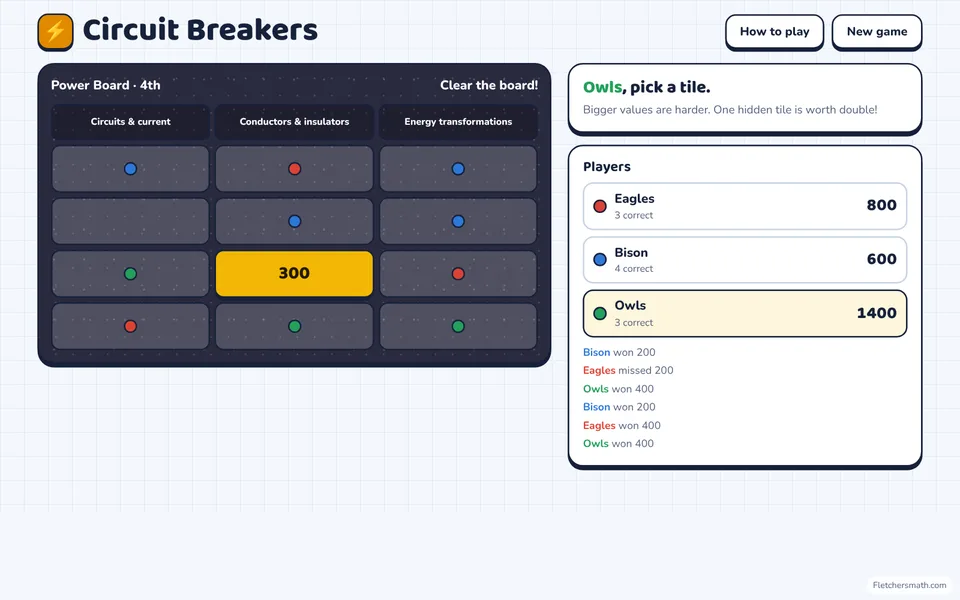
Circuits, conductors, electromagnets, Ohm’s law and energy conversions in a high-voltage game show.
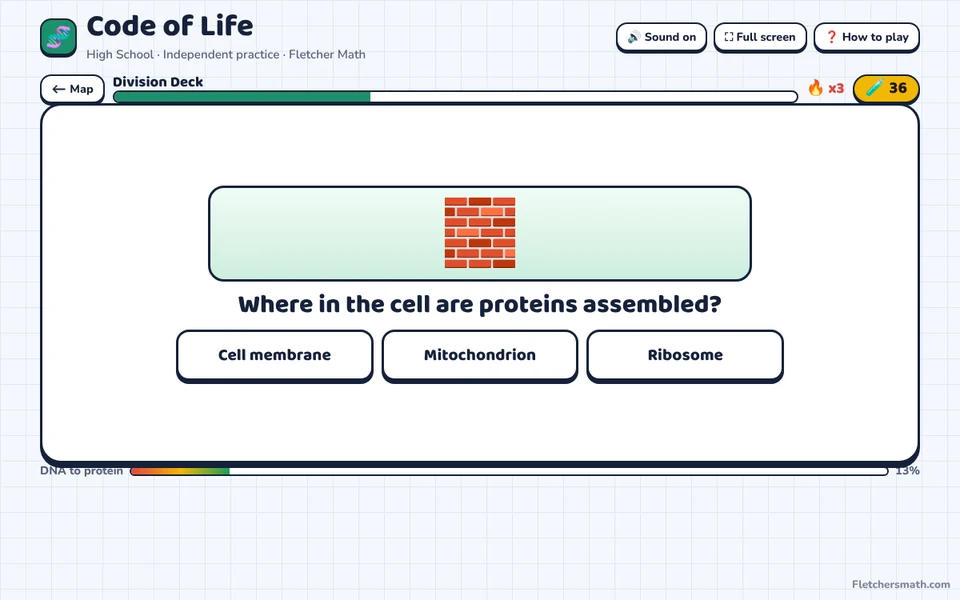
A single-player biology game for high school. Read DNA and mRNA, follow mitosis, explain feedback loops, compare photosynthesis and respiration, calculate energy pyramids, solve Punnett squares and explain natural selection, then finish with a skills report for seven NGSS biology standards.
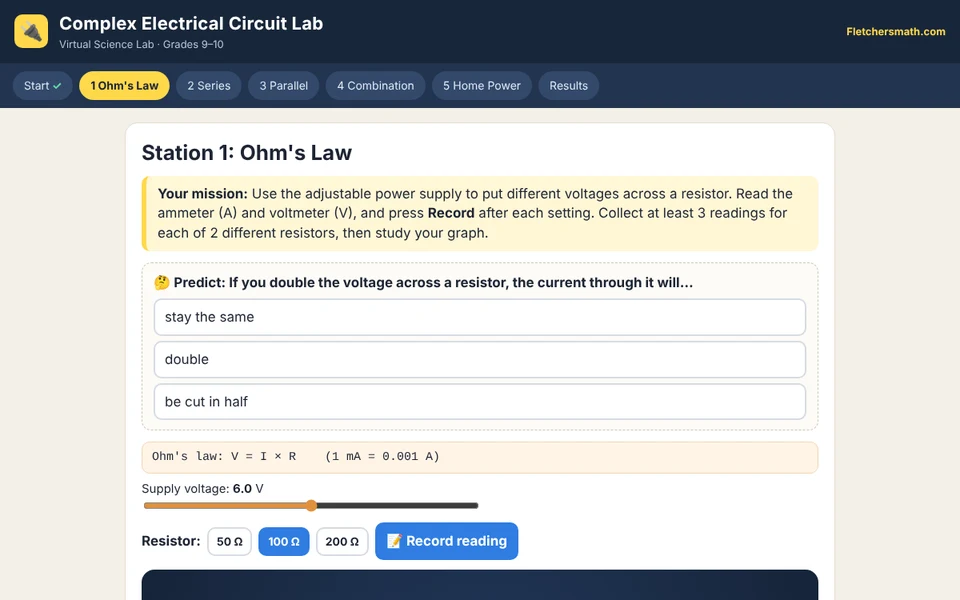
Students test Ohm's and Kirchhoff's laws, solve combination circuits and overload a home circuit.
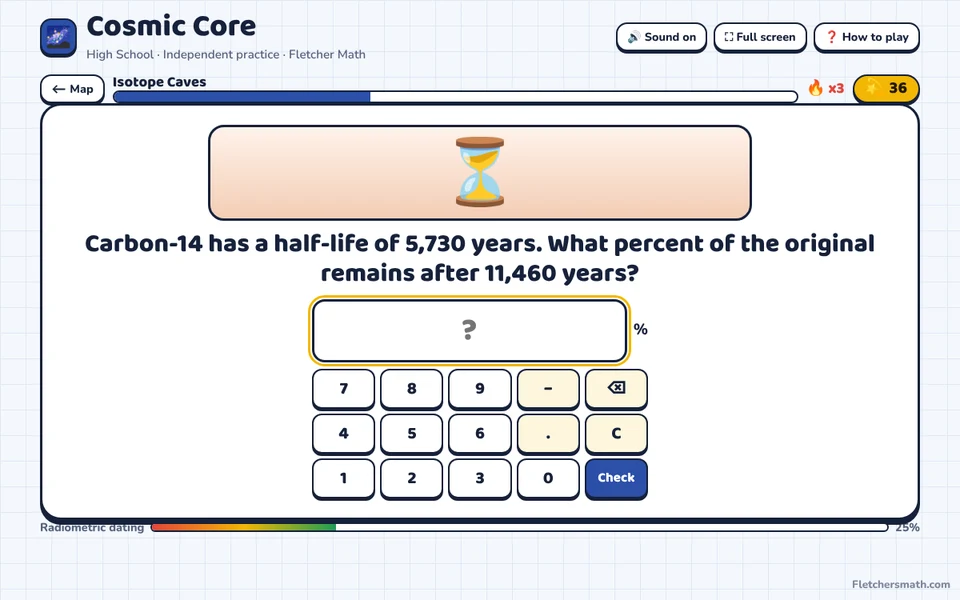
A single-player Earth and space science game for high school. Explain plate tectonics, date rocks with half-lives, trace how life and Earth changed together, read climate evidence, follow the lives of stars, use Big Bang evidence and apply Kepler's laws, then finish with a skills report for seven NGSS Earth and space standards.
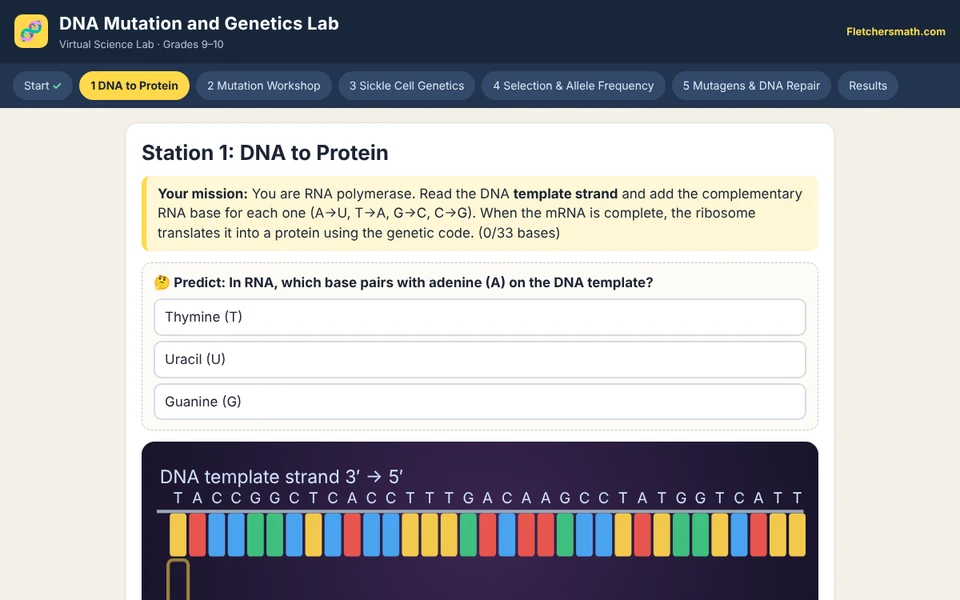
Students translate a gene, make mutations, trace sickle cell inheritance and model selection.
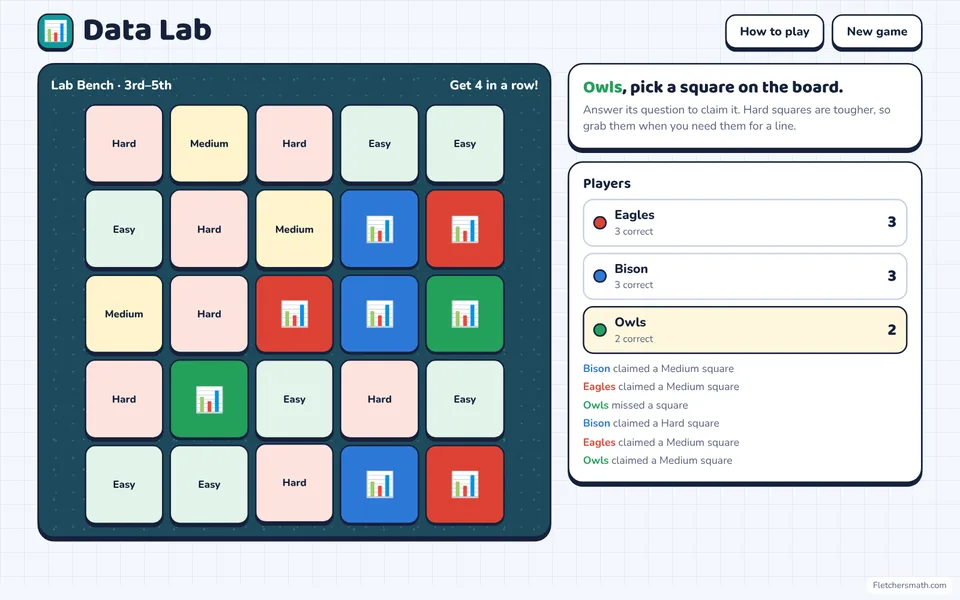
Variables, fair tests, tables, graphs, mean and median, and claims backed by data.
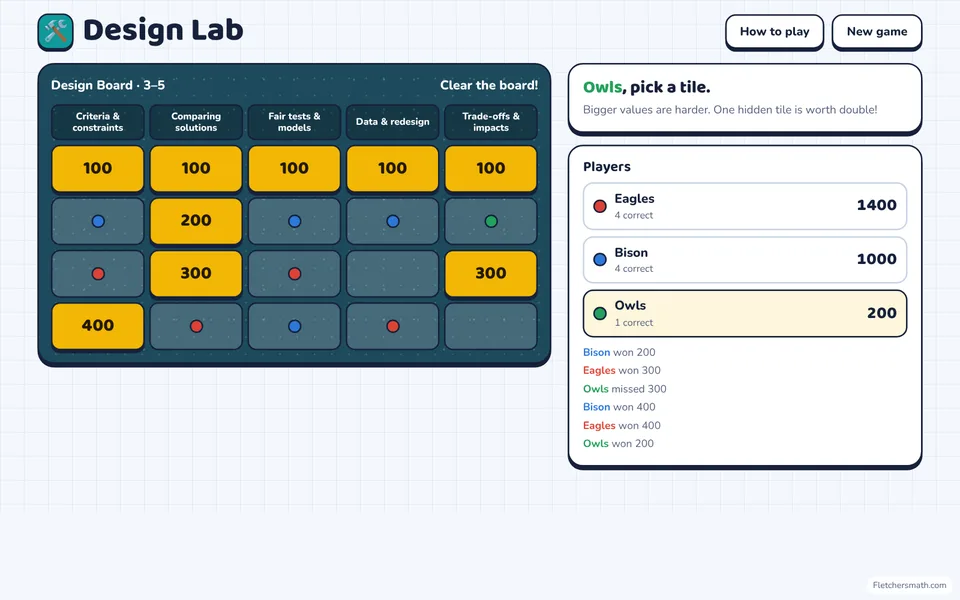
The engineering design process: criteria and constraints, fair tests, using data to improve designs and trade-offs.
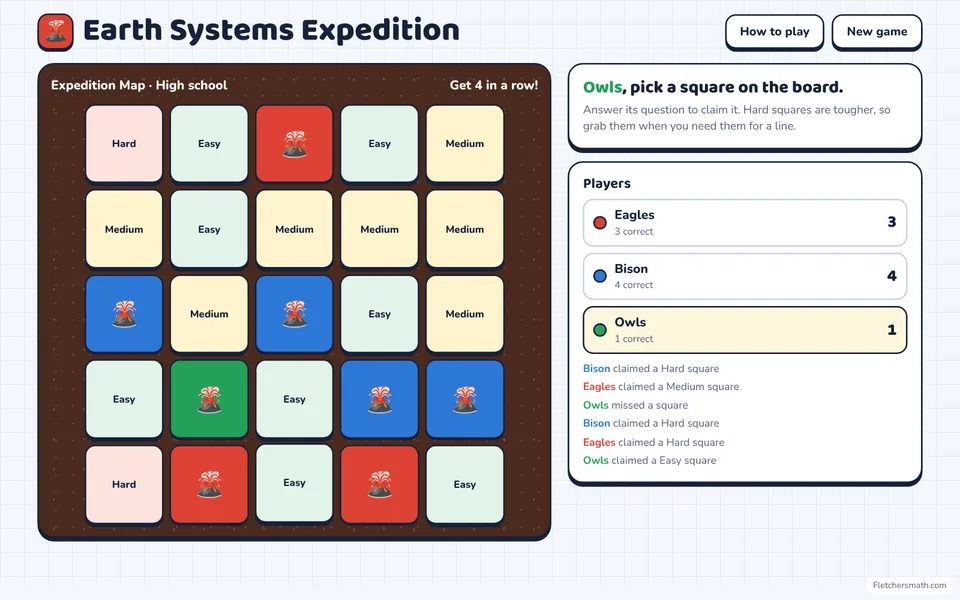
Plate tectonics, Earth’s interior, the water and carbon cycles, climate feedbacks, resources and sustainability.
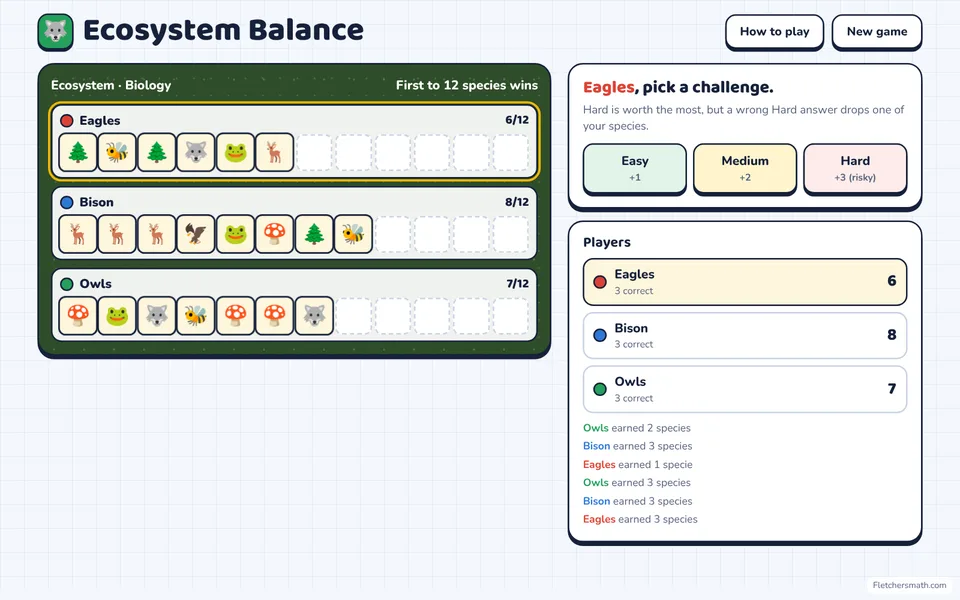
Carrying capacity, population growth, energy pyramids, the carbon cycle, biodiversity and human impact.
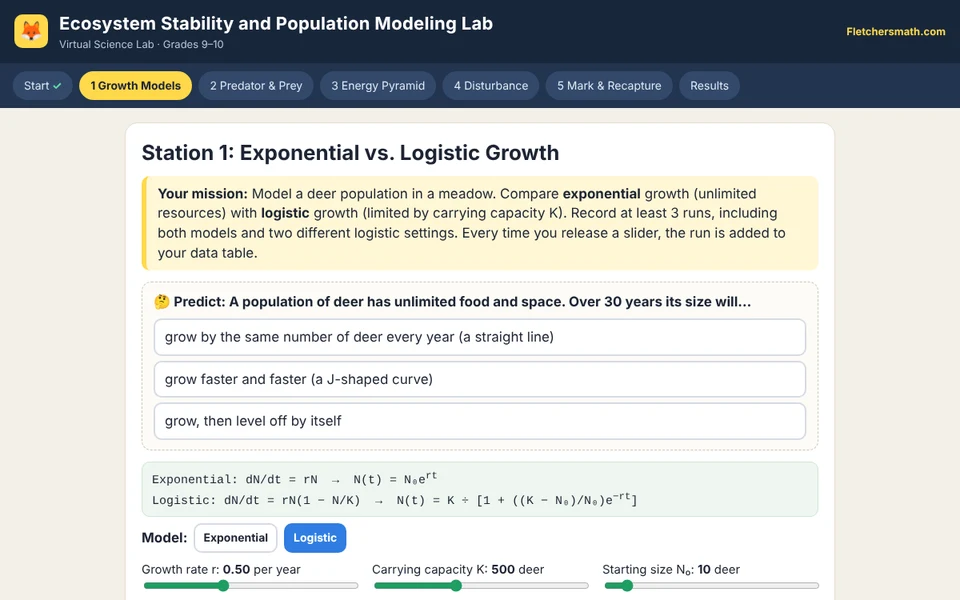
Students run population models, predator–prey cycles, energy pyramids, disturbance recovery and mark-and-recapture.
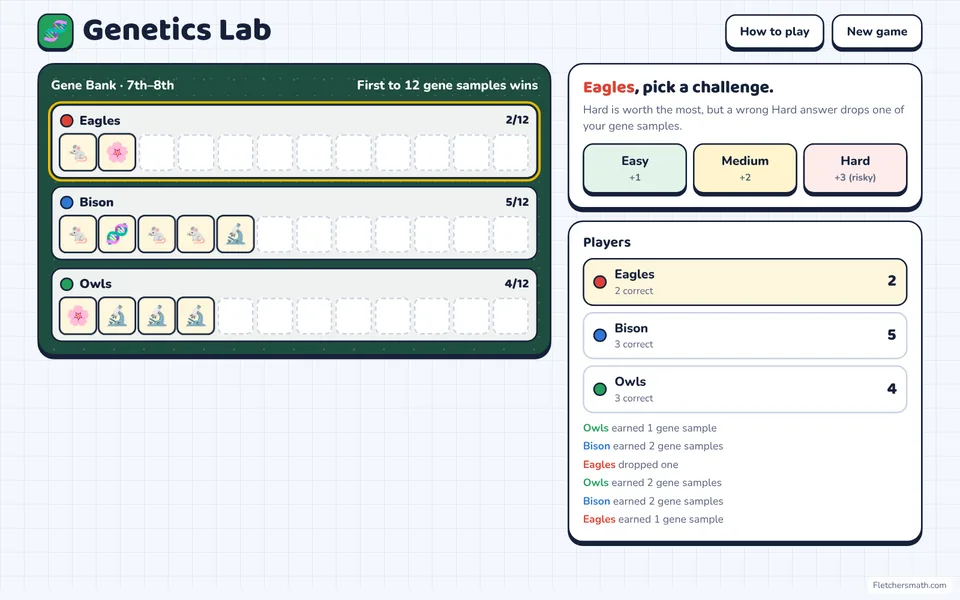
DNA, genes, Punnett squares, inheritance patterns, mutations and natural selection.
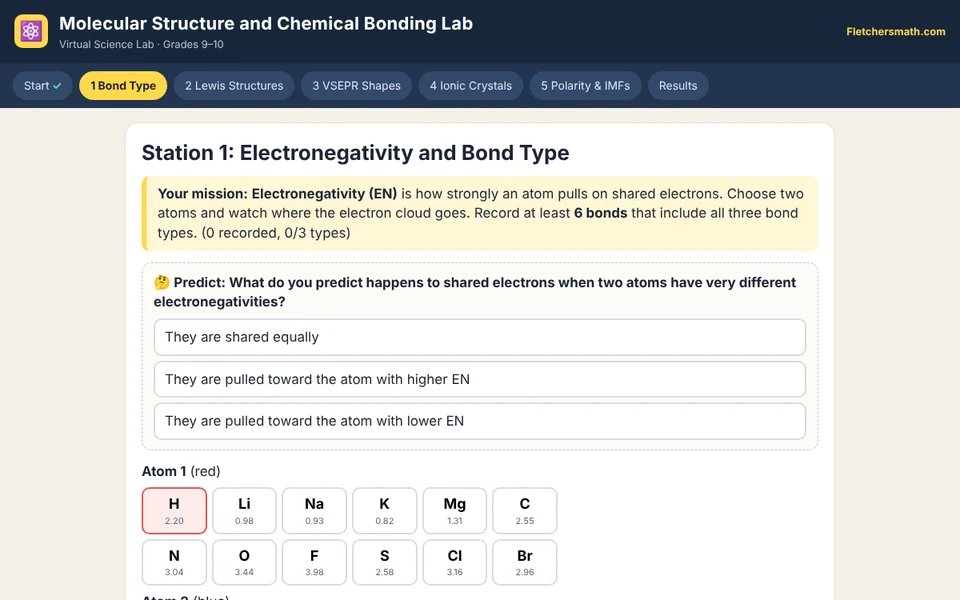
Students predict bond types, build Lewis structures and VSEPR shapes, and link polarity to boiling.
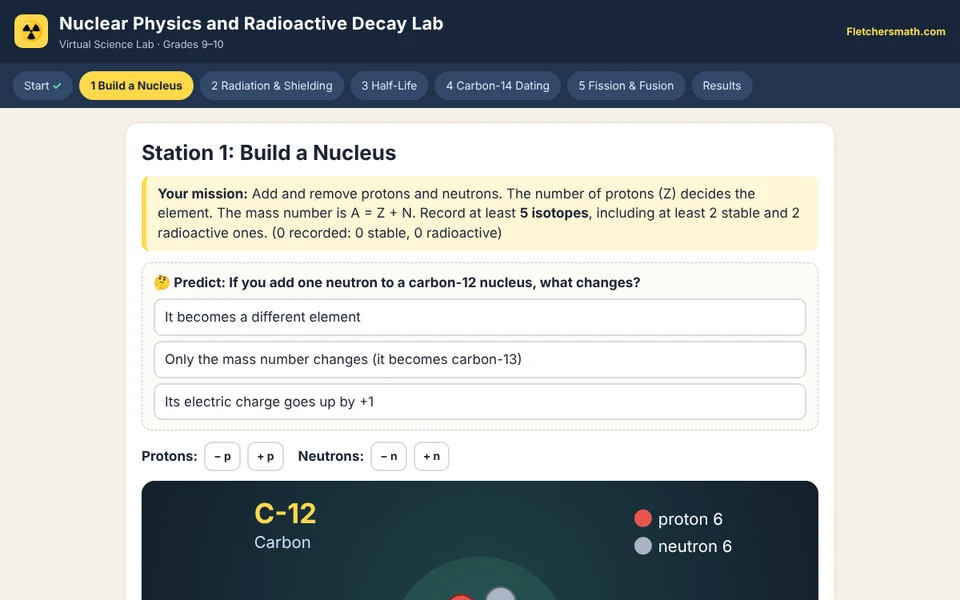
Students build nuclei, test shielding, measure half-life, carbon-date samples and find mass defect.
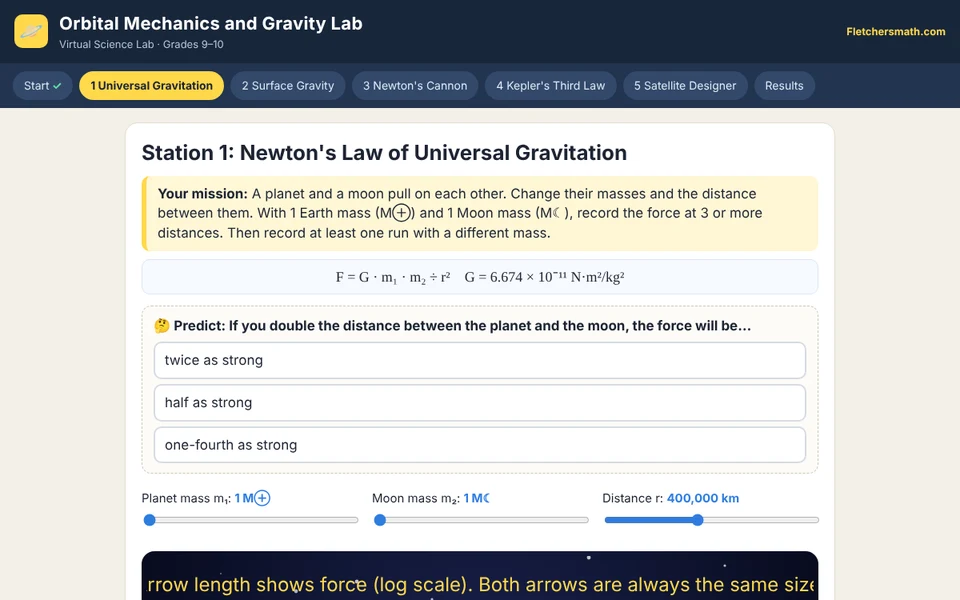
Students measure gravity, fire Newton's cannon into orbit, test Kepler's third law and find a geostationary altitude.
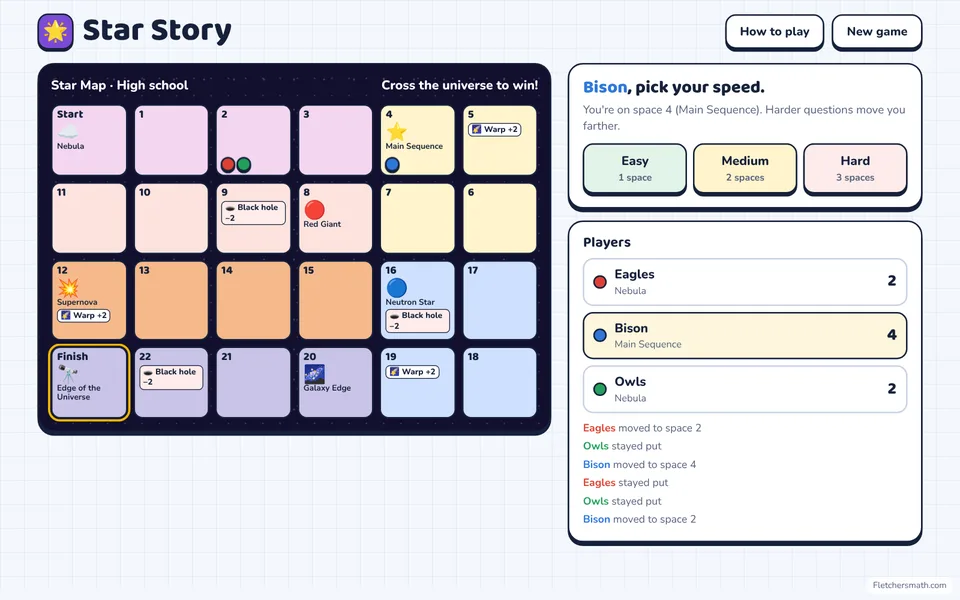
Fusion, the life of stars, the Big Bang, how elements form, orbits and Earth’s early history. Travel across the universe.
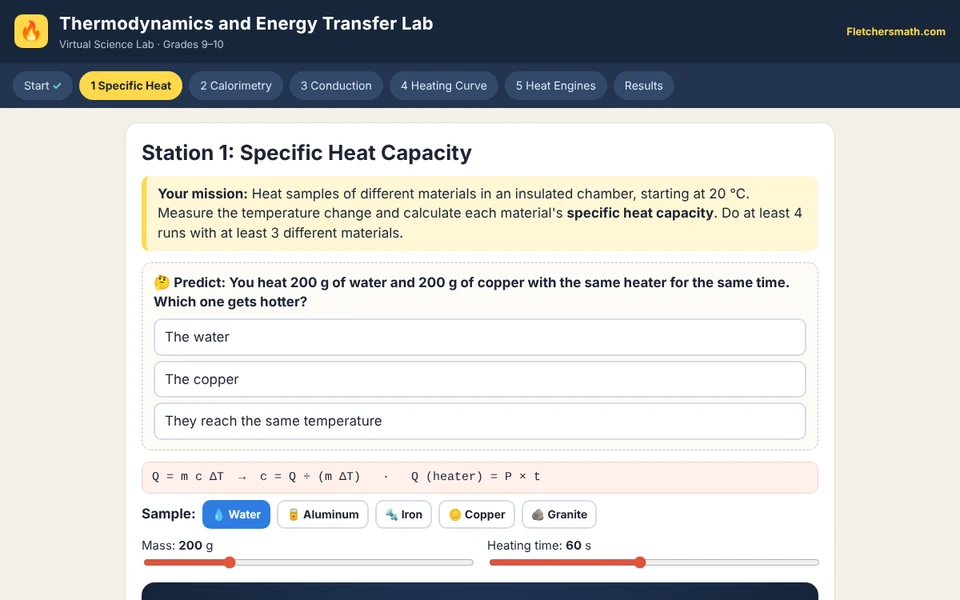
Students measure specific heat, run calorimetry, build a heating curve and test heat engines.
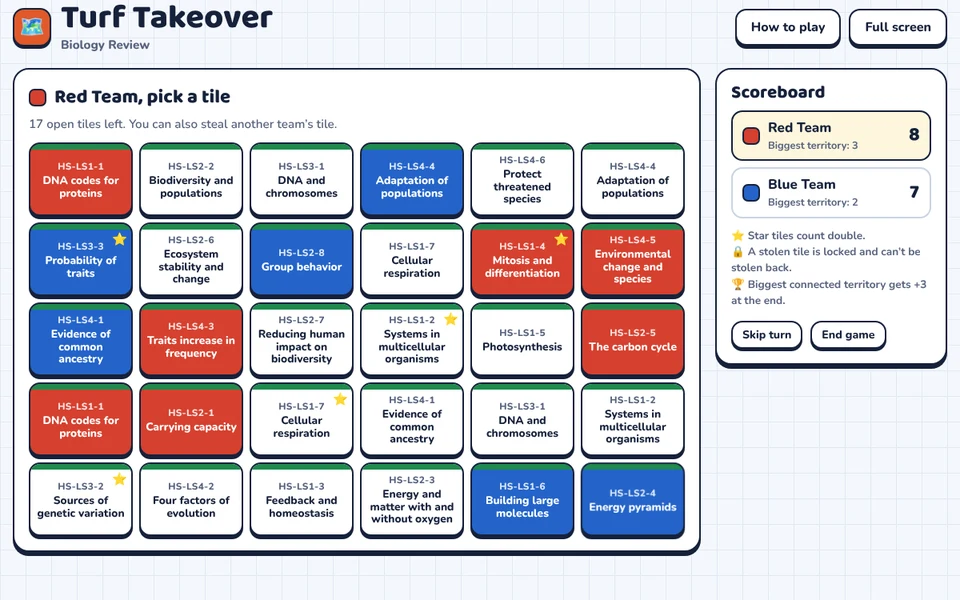
A team review game for every NGSS Biology standard. Teams claim tiles on a map by answering questions, and can steal each other's tiles. Play a full review or pick the standards you want. The results show % correct for each standard.
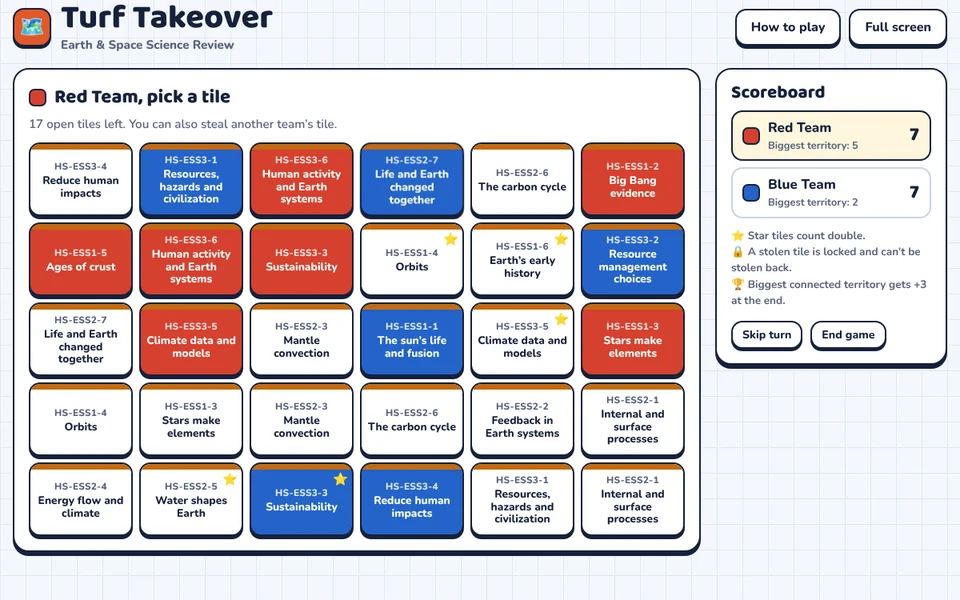
A team review game for every NGSS Earth & Space Science standard. Teams claim tiles on a map by answering questions, and can steal each other's tiles. Play a full review or pick the standards you want. The results show % correct for each standard.
The High School Classroom Bundle has 10 games, 3 brain breaks and 2 labs picked for this grade. The High School Classroom Kit has every product for High School: 75 games, 10 brain breaks and 44 labs.
The All-Access Teacher License includes every game, every grade and all future games.
Browse all grades, topics and standards
Teach both subjects? See all of our math and science games by grade.