Grades 6–8 & Biology · Cells & Body Systems
Cell City
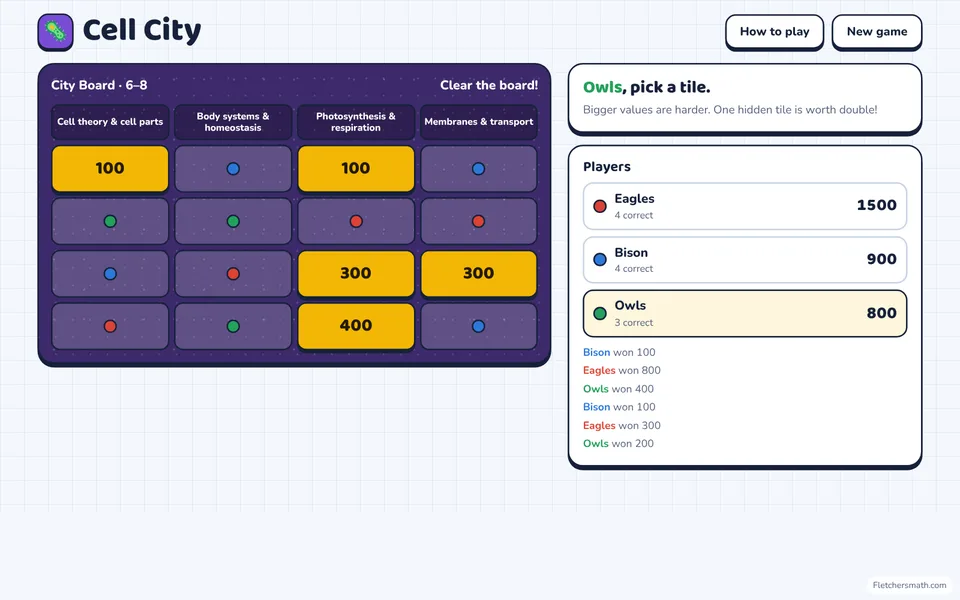
Organelles, body systems, photosynthesis, respiration, DNA and transport in a game-show city tour.
7 multiplayer classroom games and 2 virtual labs aligned to NGSS standard MS-LS1-2. The games play on one shared screen and the labs run on each student's device. No student logins, works offline, and every one has a free demo you can try right now.
Organelles, body systems, photosynthesis, respiration, DNA and transport in a game-show city tour.
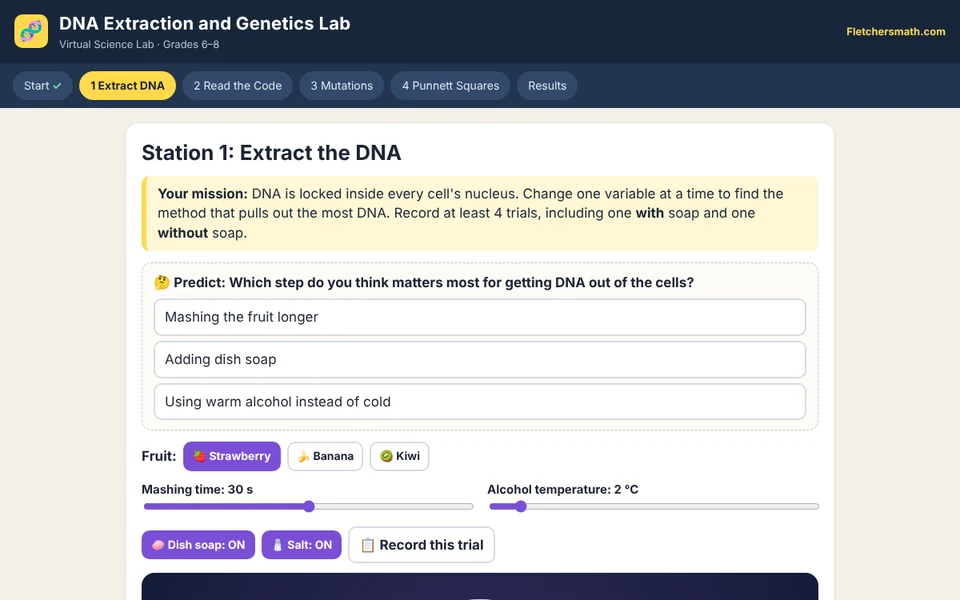
Students extract DNA from fruit, build and translate a DNA strand, mutate a human gene and grow pea plant crosses.
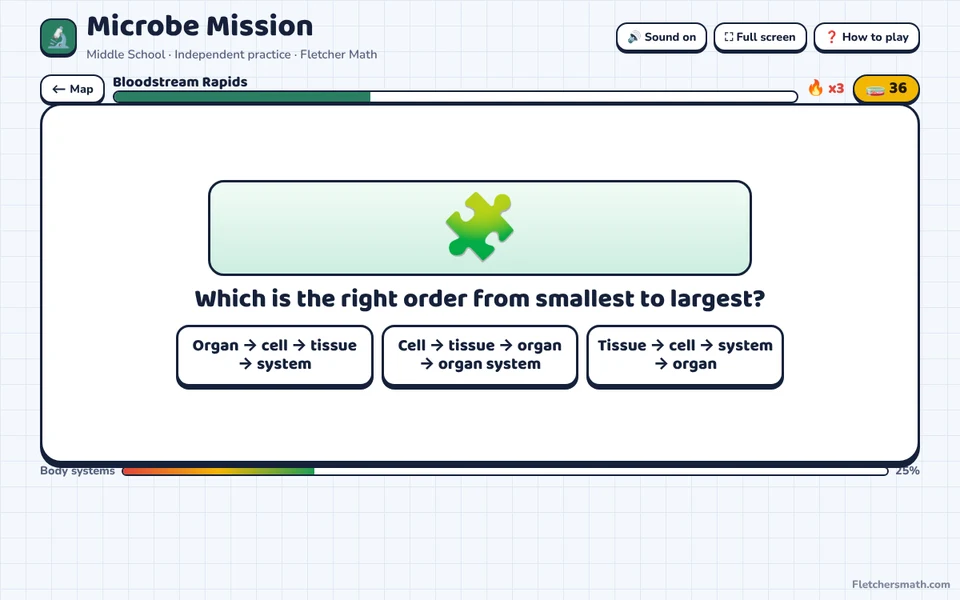
A single-player life science game for grades 6–8. Shrink down to explore cell parts, body systems, photosynthesis, ecosystem interactions, Punnett squares and natural selection, then finish with a skills report for six middle school NGSS life science standards.
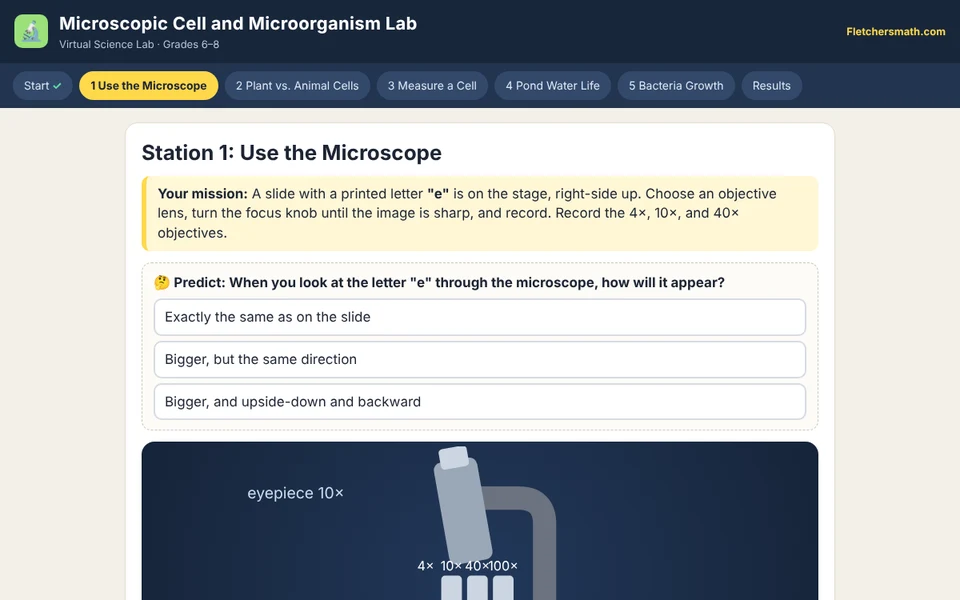
Students focus a virtual microscope, compare plant and animal cells, measure cells, key pond life and model bacteria.
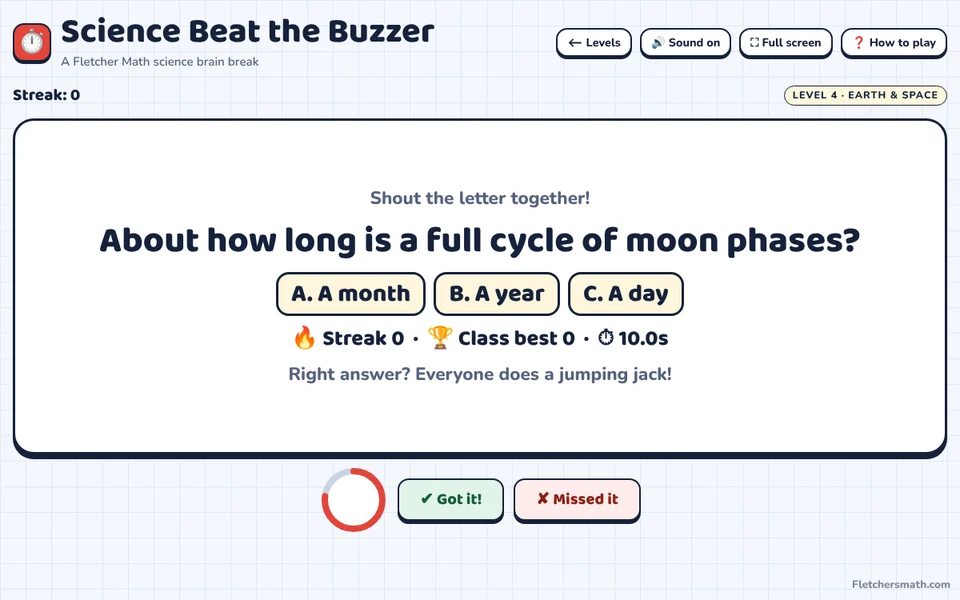
The class shouts the letter of the right answer to build a streak before the buzzer. Every right answer makes the clock a little faster.
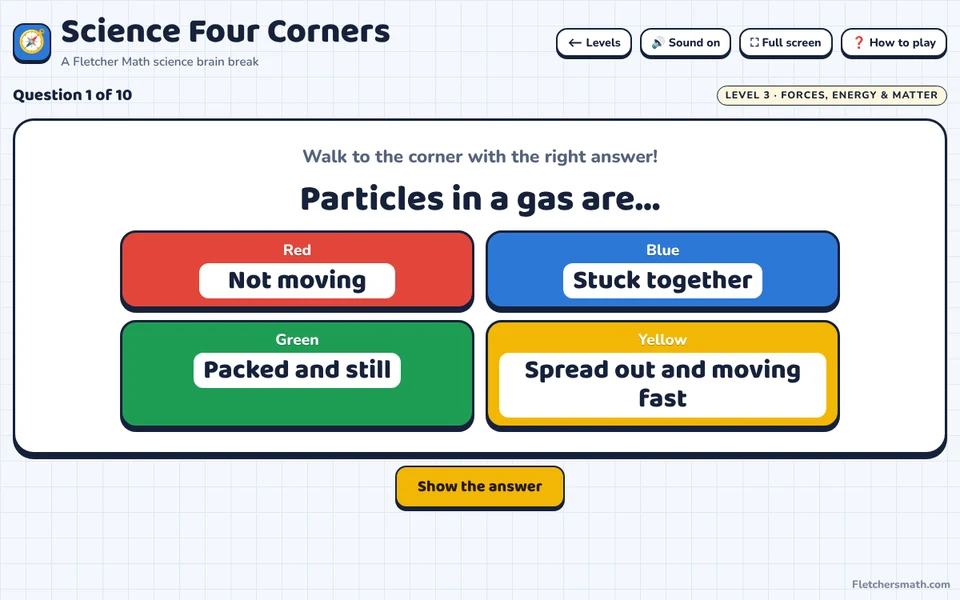
A science question appears with four answers, one for each corner of the room. Students walk to the corner they think is right, then the answer lights up.
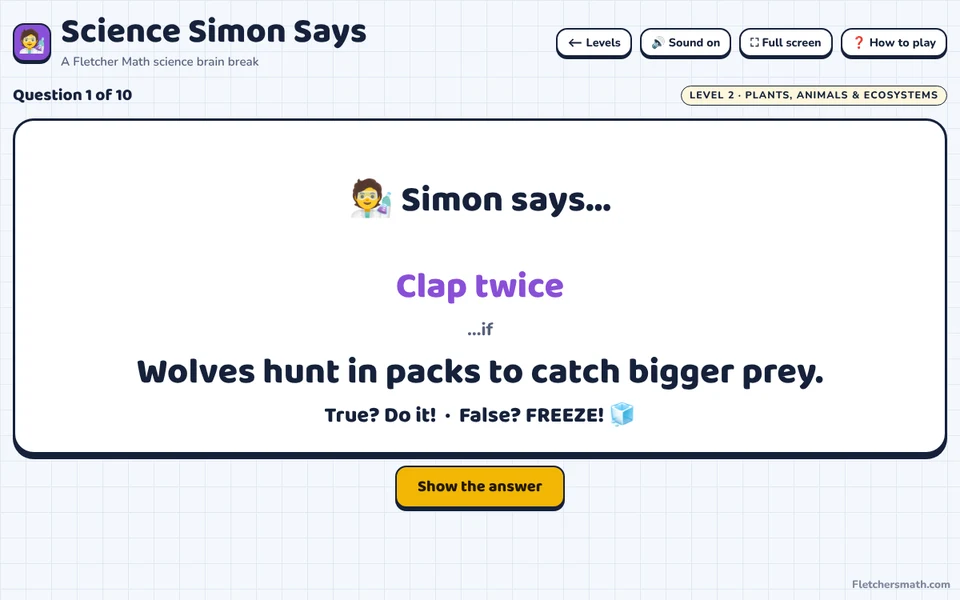
Simon says buzz like a bee if plants need sunlight to grow! Students do the move only when Simon says it and the science is true.
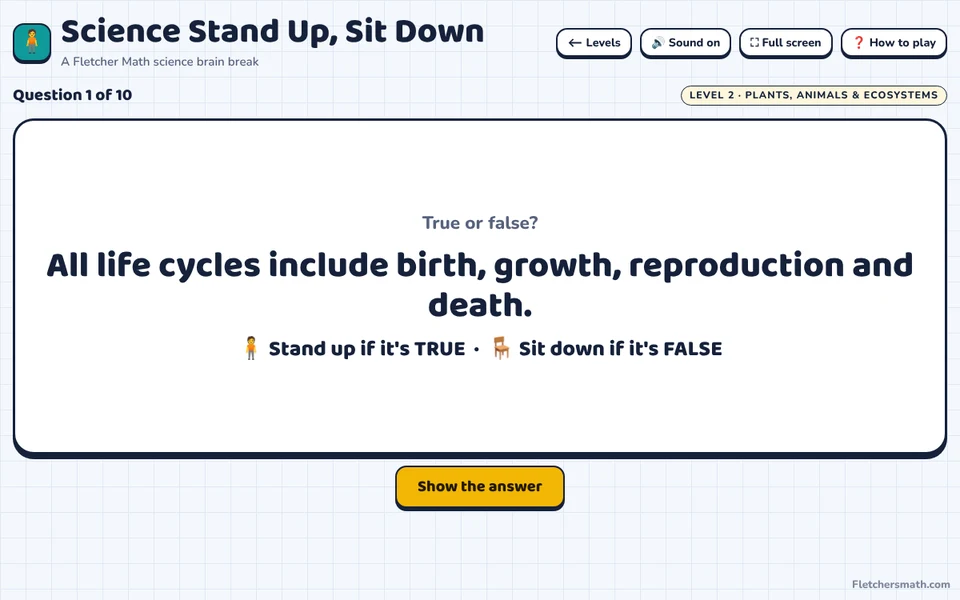
A science statement appears on the screen. Students stand up if it's true and sit down if it's false, then the answer and the real science pop up.
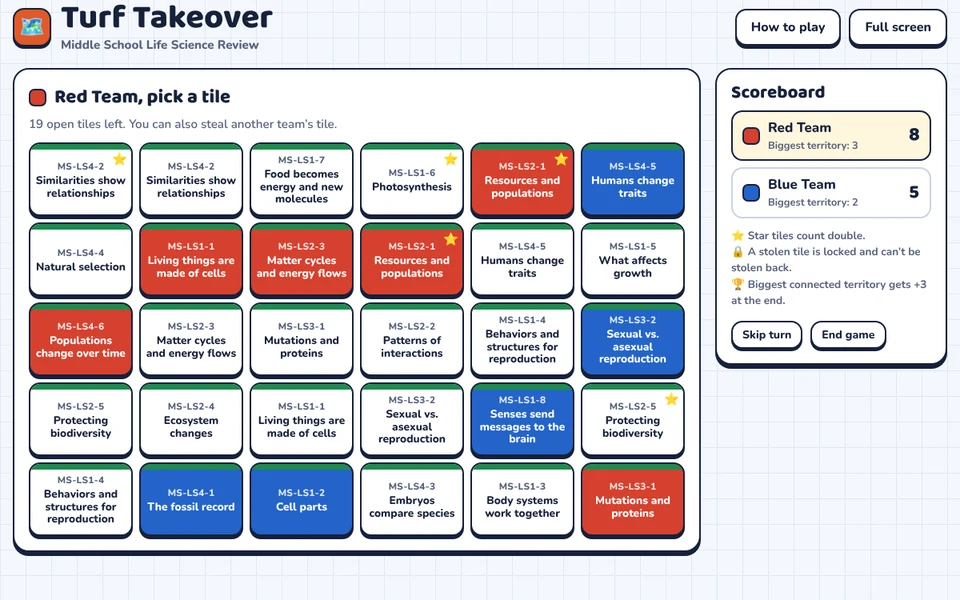
A team review game for every NGSS middle school life science standard. Teams claim tiles on a map by answering questions, and can steal each other's tiles. Play a full review or pick the standards you want. The results show % correct for each standard.
The All-Access Teacher License includes every game, every grade and all future games.