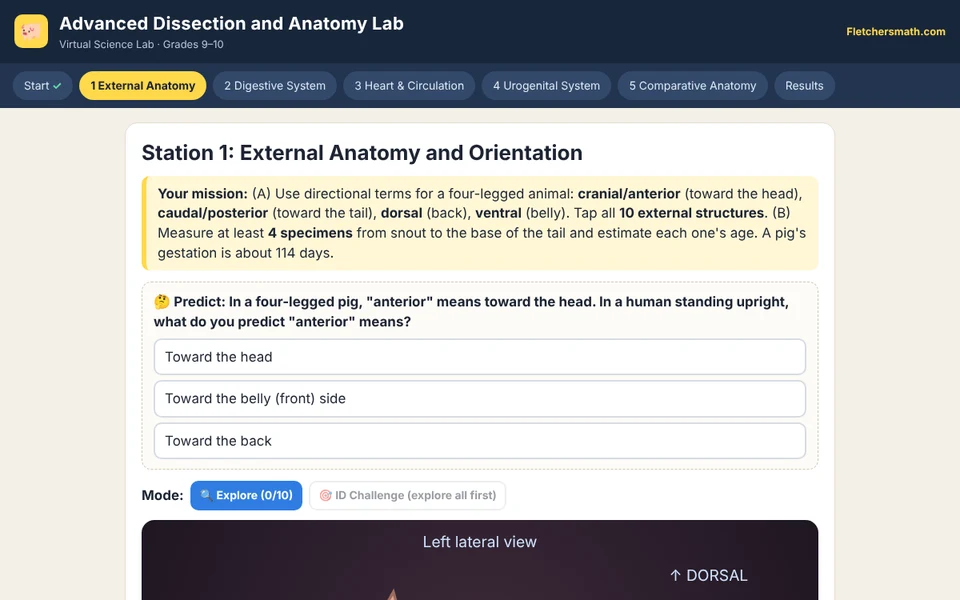
Grades 9–10 · Life Science
Advanced Dissection and Anatomy Lab
Students do a virtual, diagram-based fetal pig dissection and compare pig, human and frog anatomy.
12 multiplayer classroom games and 9 virtual labs that practice cell & biology skills, for Kindergarten, 1st Grade, 2nd Grade, 3rd Grade, 4th Grade, 5th Grade and more. The games play on one shared screen and the labs run on each student's device. No student logins, works offline, and every one has a free demo you can try right now.
Students do a virtual, diagram-based fetal pig dissection and compare pig, human and frog anatomy.
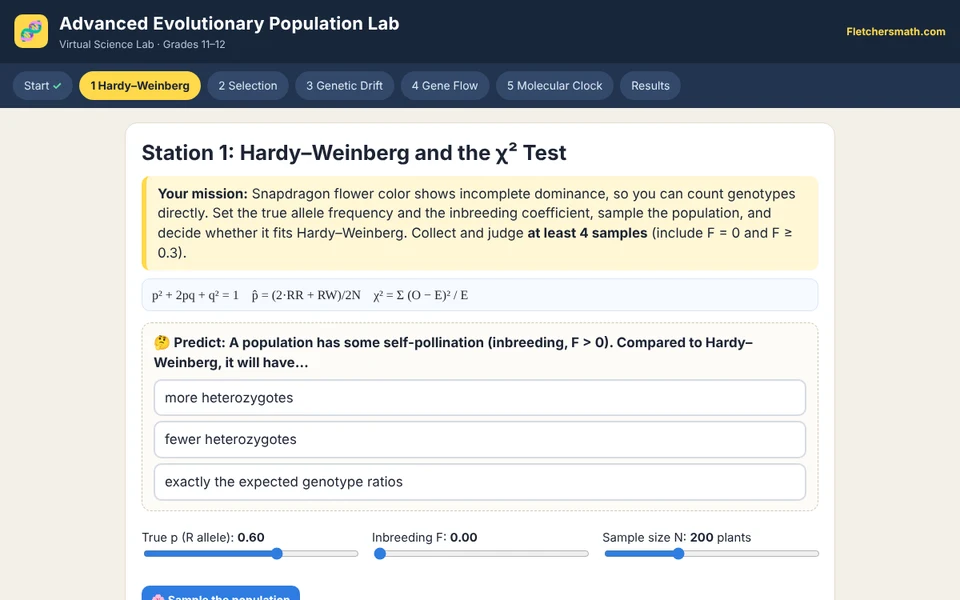
Students test Hardy–Weinberg with χ², model selection, drift and gene flow, and calibrate a molecular clock.
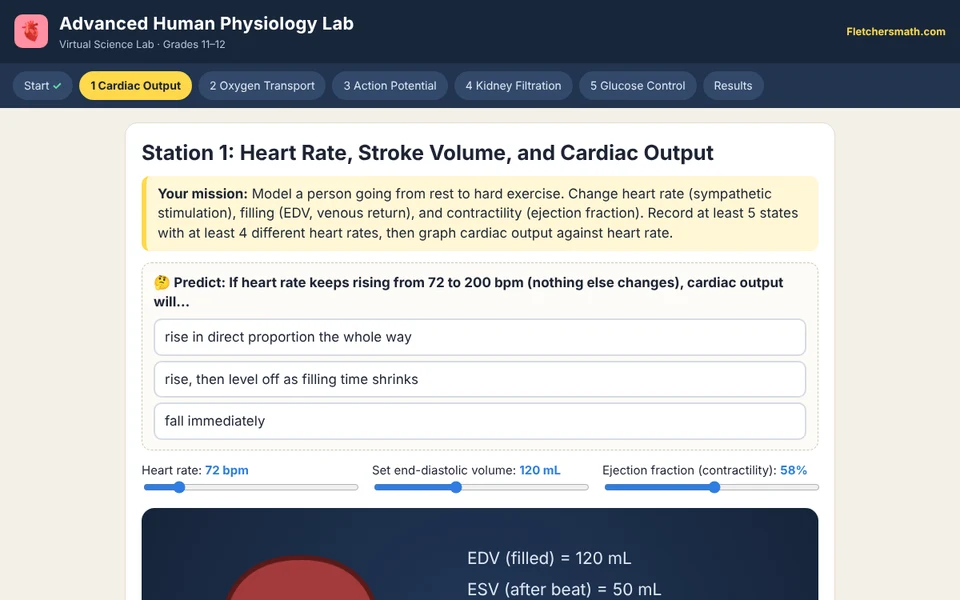
Students model cardiac output, oxygen binding, action potentials, kidney filtration and glucose tolerance tests.
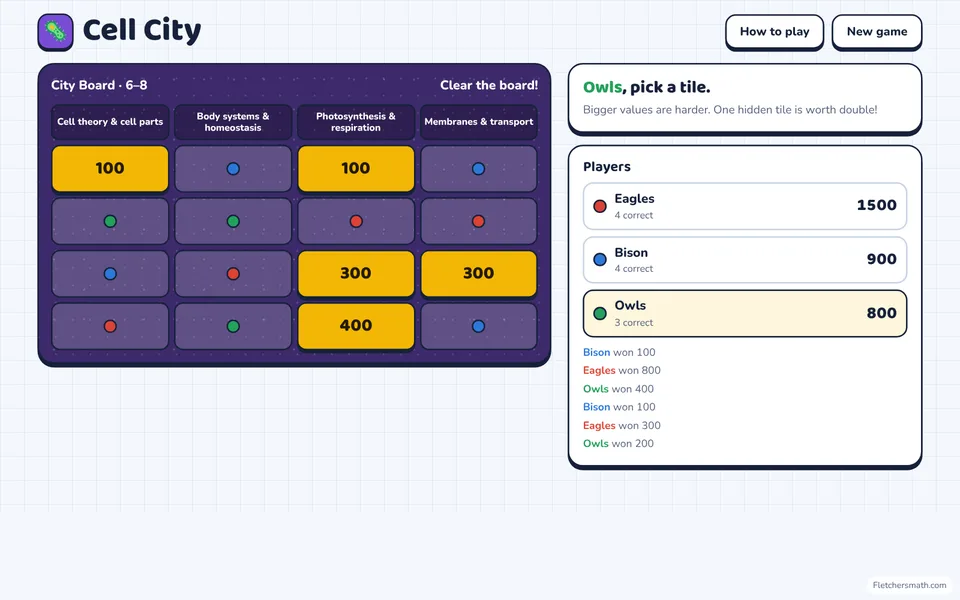
Organelles, body systems, photosynthesis, respiration, DNA and transport in a game-show city tour.
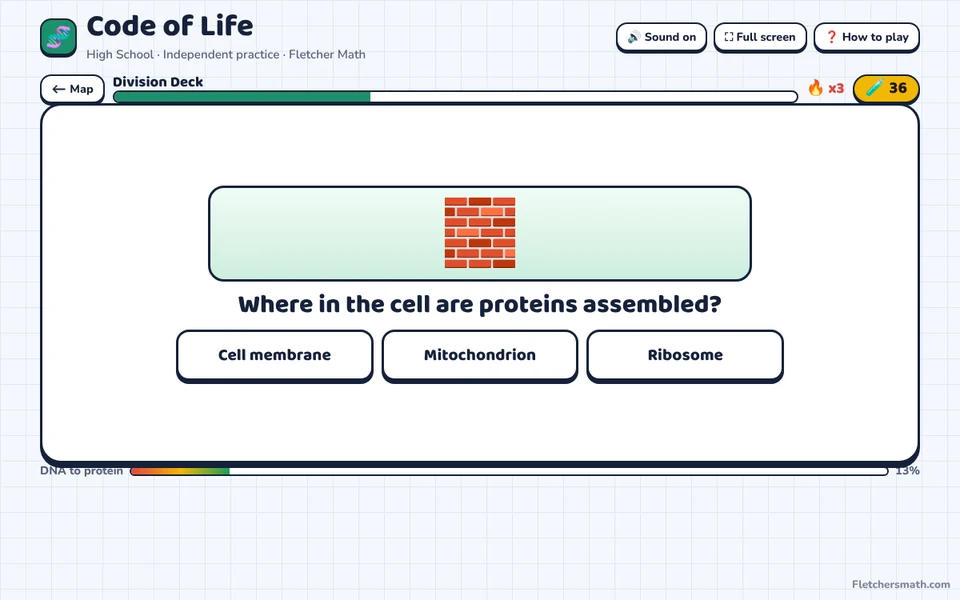
A single-player biology game for high school. Read DNA and mRNA, follow mitosis, explain feedback loops, compare photosynthesis and respiration, calculate energy pyramids, solve Punnett squares and explain natural selection, then finish with a skills report for seven NGSS biology standards.
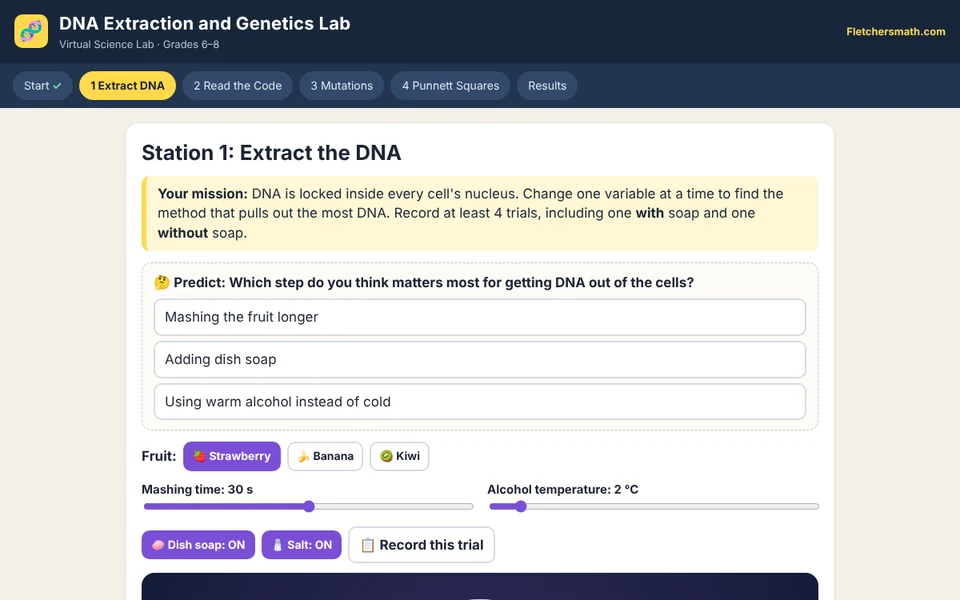
Students extract DNA from fruit, build and translate a DNA strand, mutate a human gene and grow pea plant crosses.
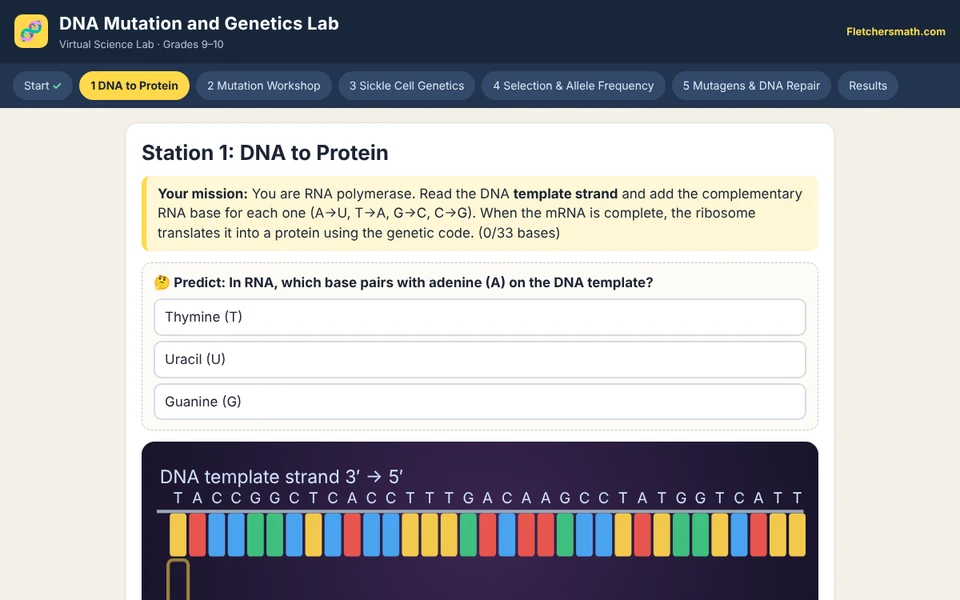
Students translate a gene, make mutations, trace sickle cell inheritance and model selection.
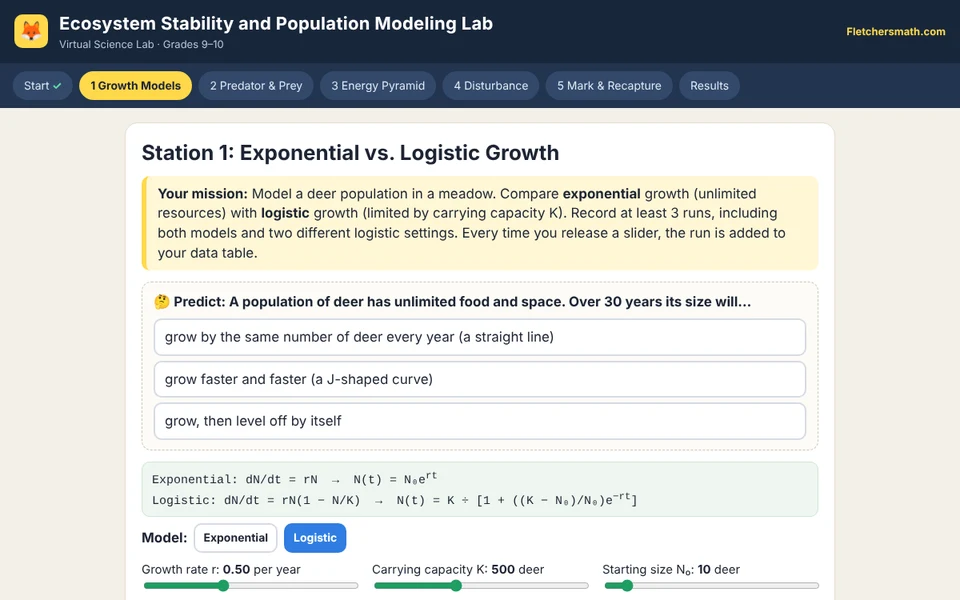
Students run population models, predator–prey cycles, energy pyramids, disturbance recovery and mark-and-recapture.
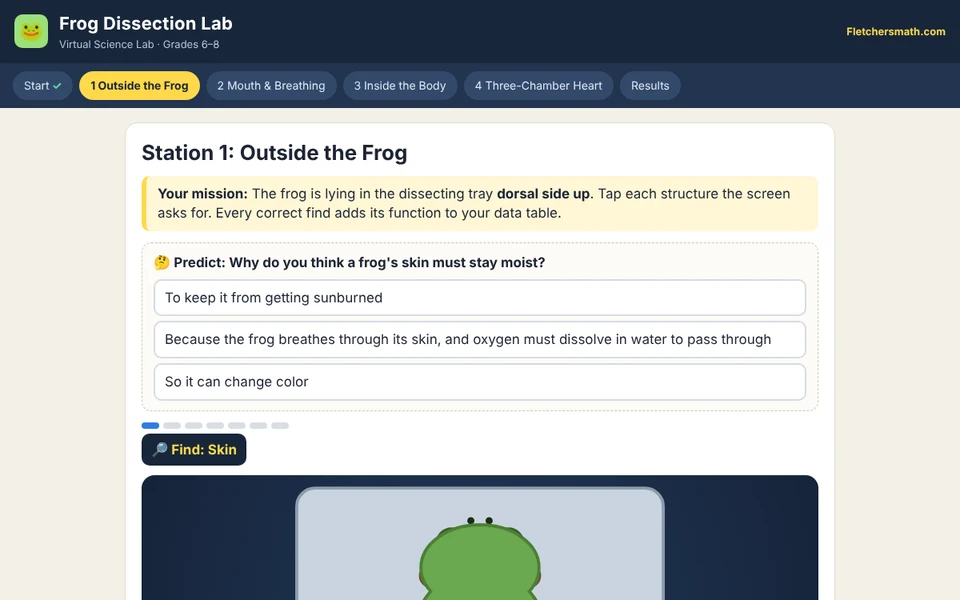
Students find frog structures in a virtual, diagram-based dissection, then model breathing and a 3-chamber heart.
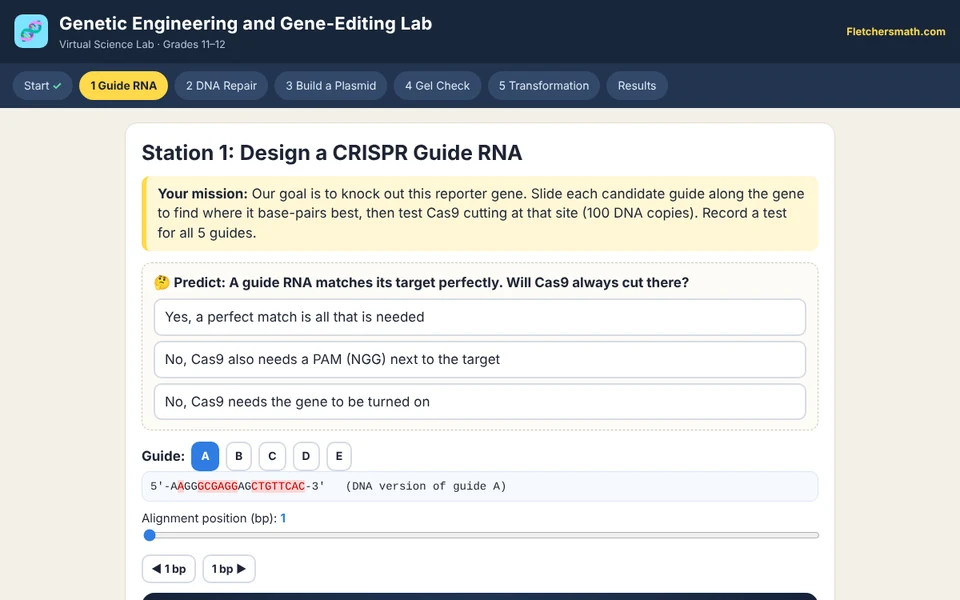
Students design a CRISPR guide, model DNA repair, build and check a plasmid on a gel, and analyze transformation data.
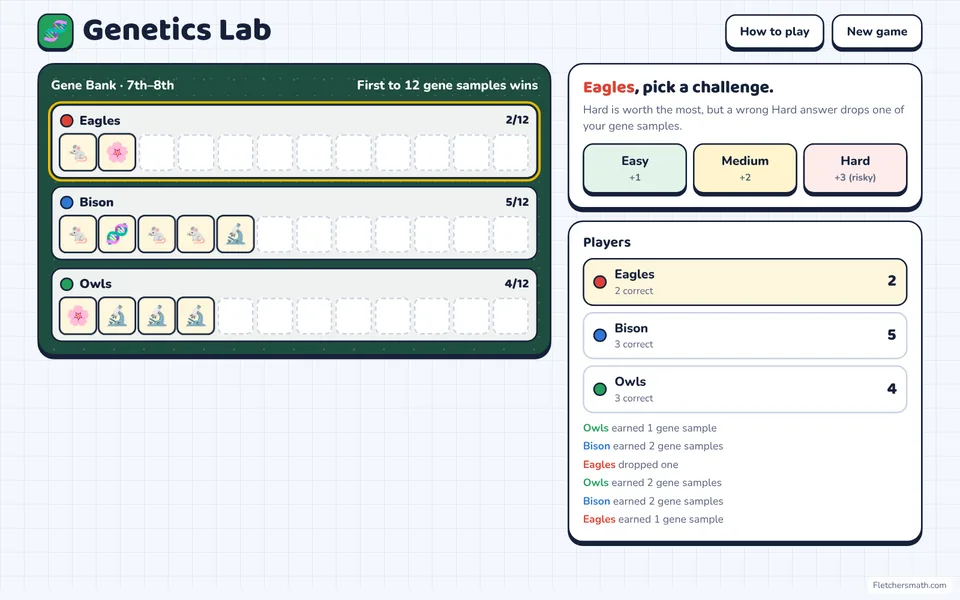
DNA, genes, Punnett squares, inheritance patterns, mutations and natural selection.
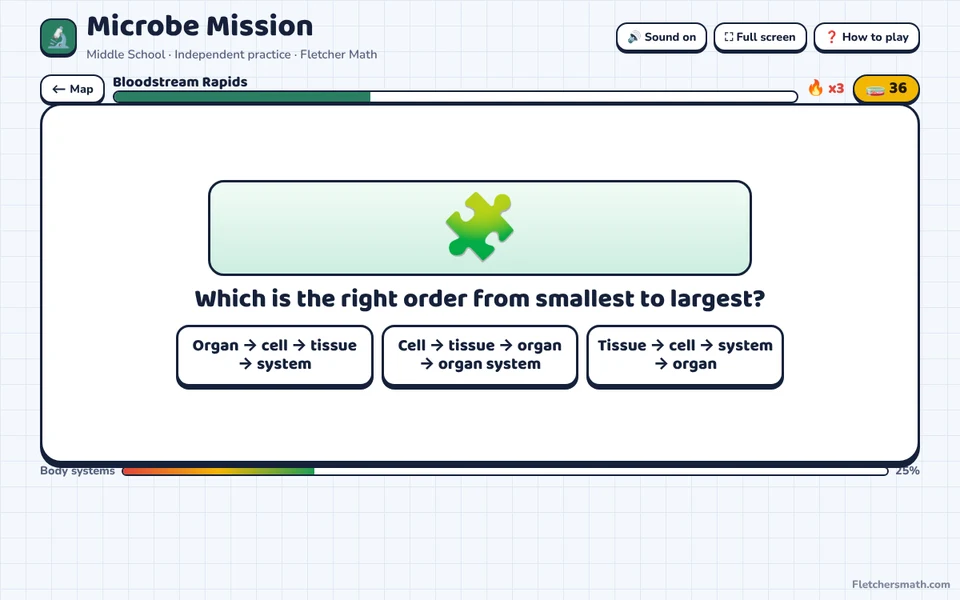
A single-player life science game for grades 6–8. Shrink down to explore cell parts, body systems, photosynthesis, ecosystem interactions, Punnett squares and natural selection, then finish with a skills report for six middle school NGSS life science standards.
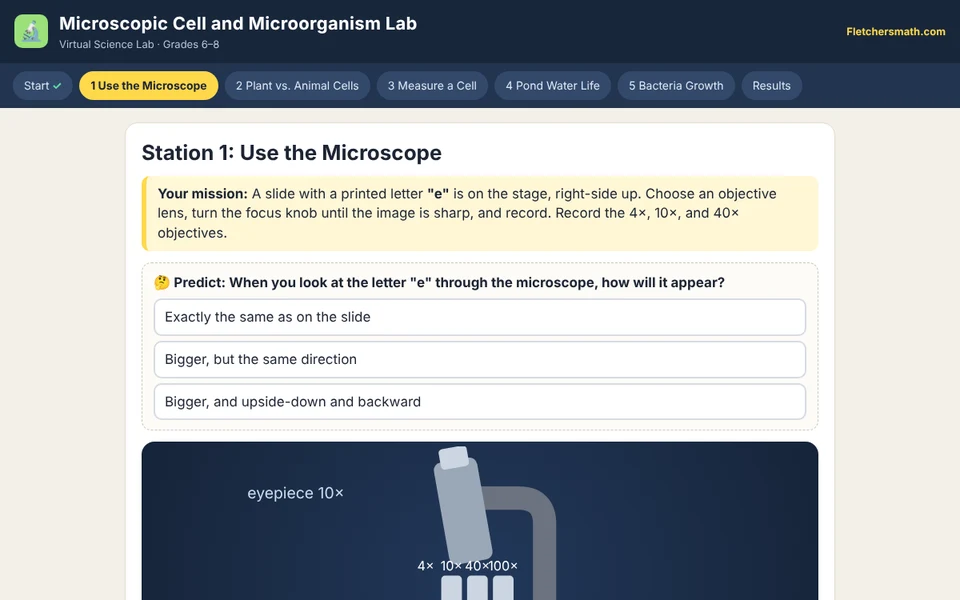
Students focus a virtual microscope, compare plant and animal cells, measure cells, key pond life and model bacteria.
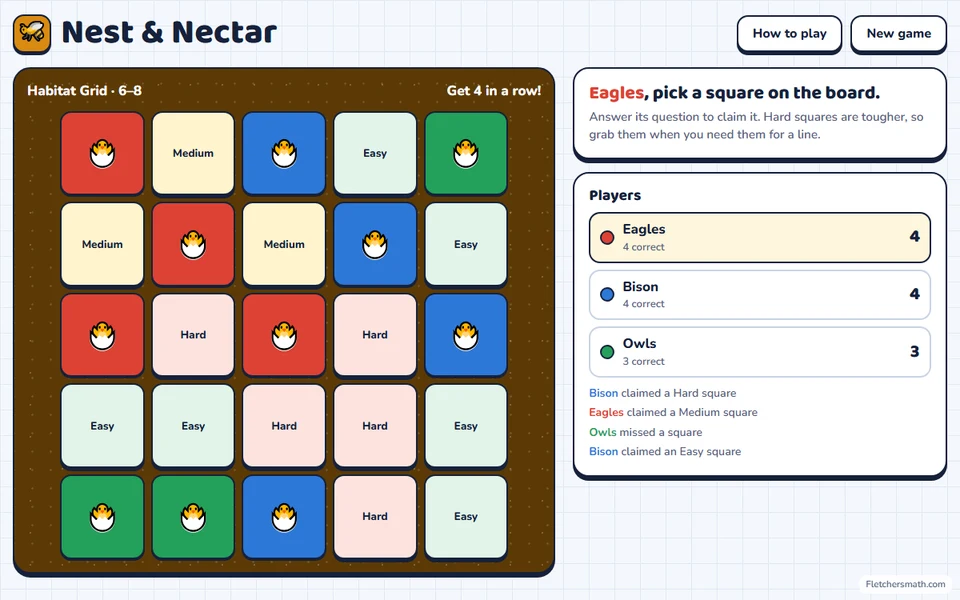
Claim squares by explaining how animal behaviors and plant structures increase the odds of reproduction, how animals help plants and how environment and genes affect growth. Get 4 in a row to win.
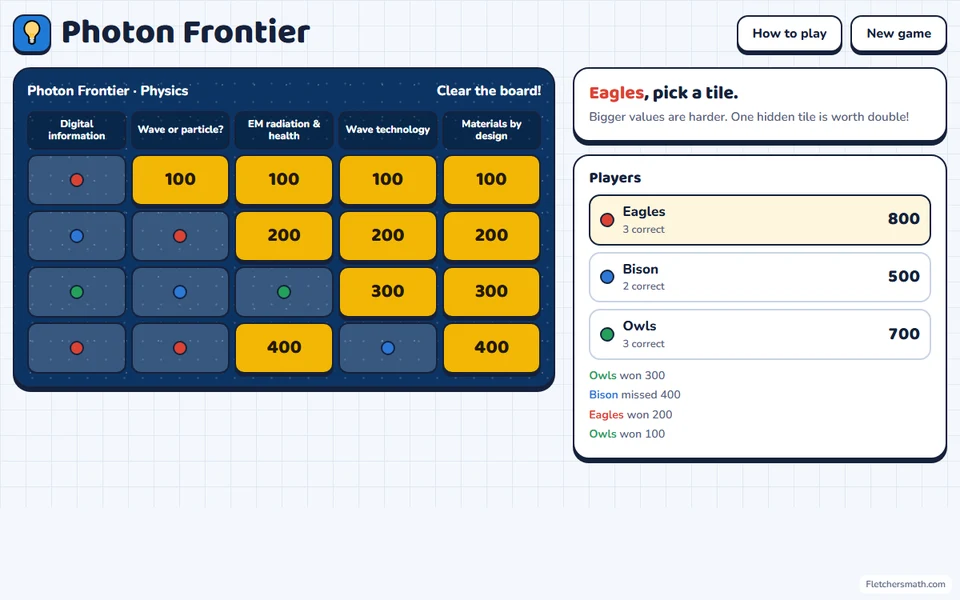
A physics game show on modern waves: digital information, wave-particle duality, EM radiation and health, technologies that use waves, and materials designed at the atomic level.
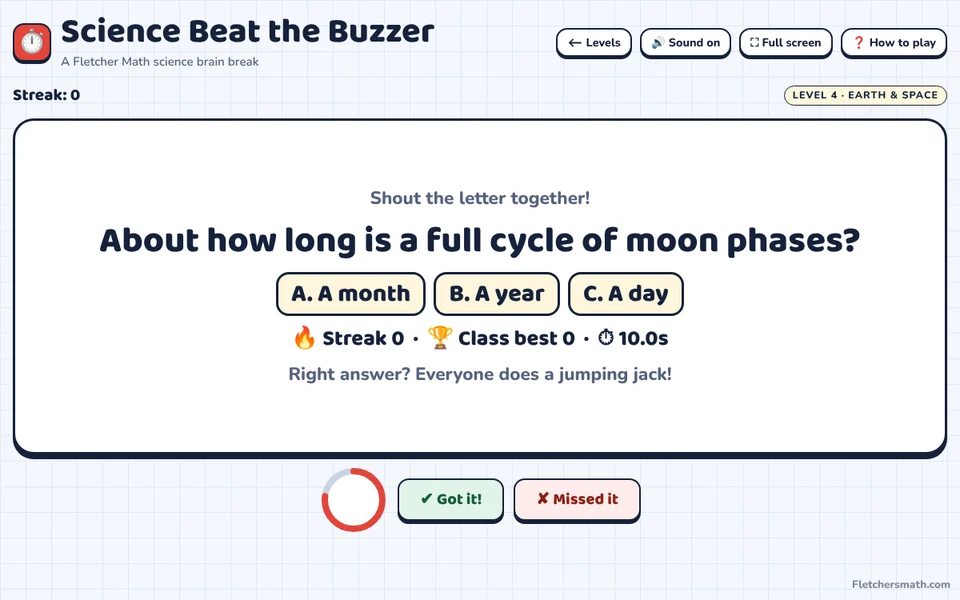
The class shouts the letter of the right answer to build a streak before the buzzer. Every right answer makes the clock a little faster.
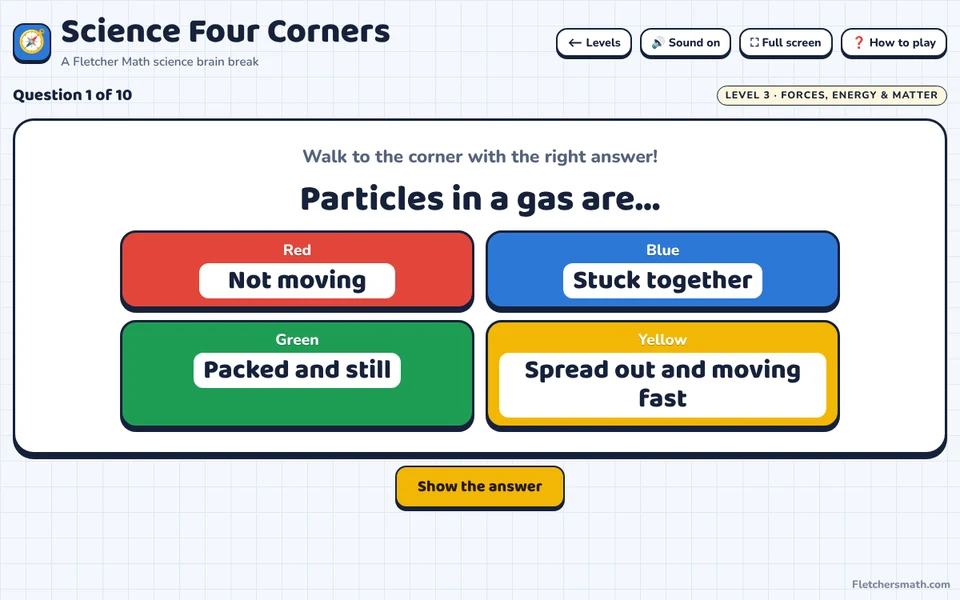
A science question appears with four answers, one for each corner of the room. Students walk to the corner they think is right, then the answer lights up.
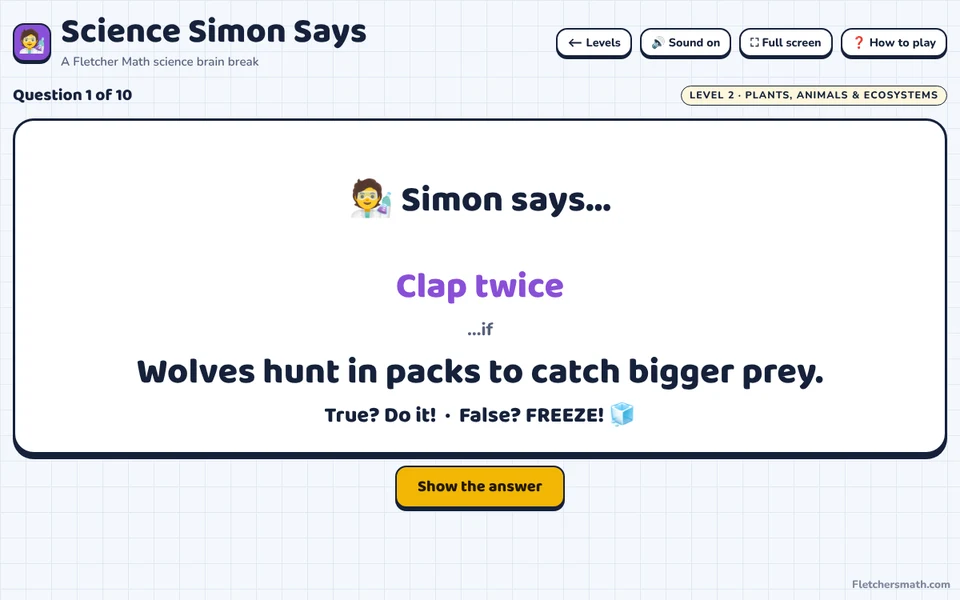
Simon says buzz like a bee if plants need sunlight to grow! Students do the move only when Simon says it and the science is true.
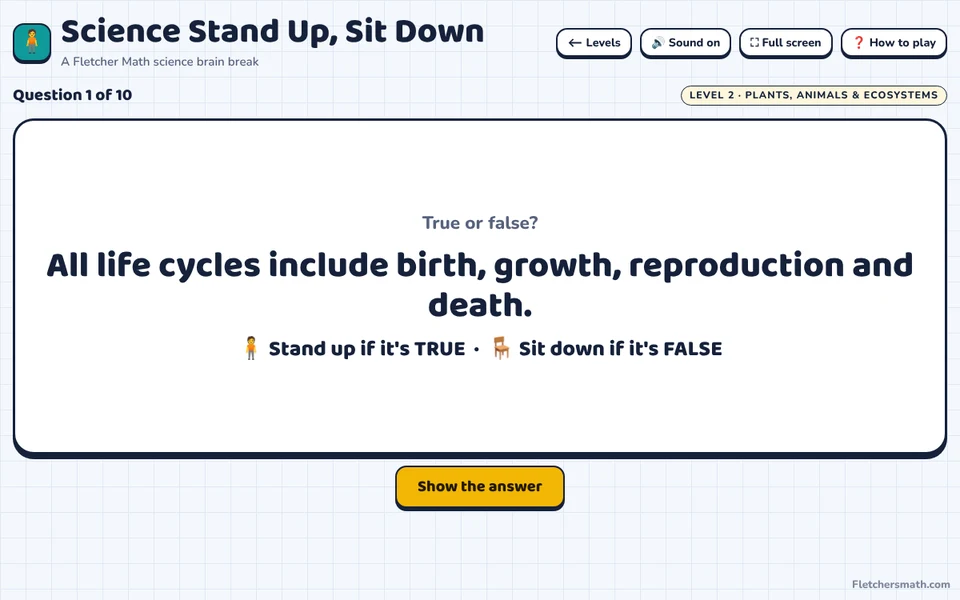
A science statement appears on the screen. Students stand up if it's true and sit down if it's false, then the answer and the real science pop up.
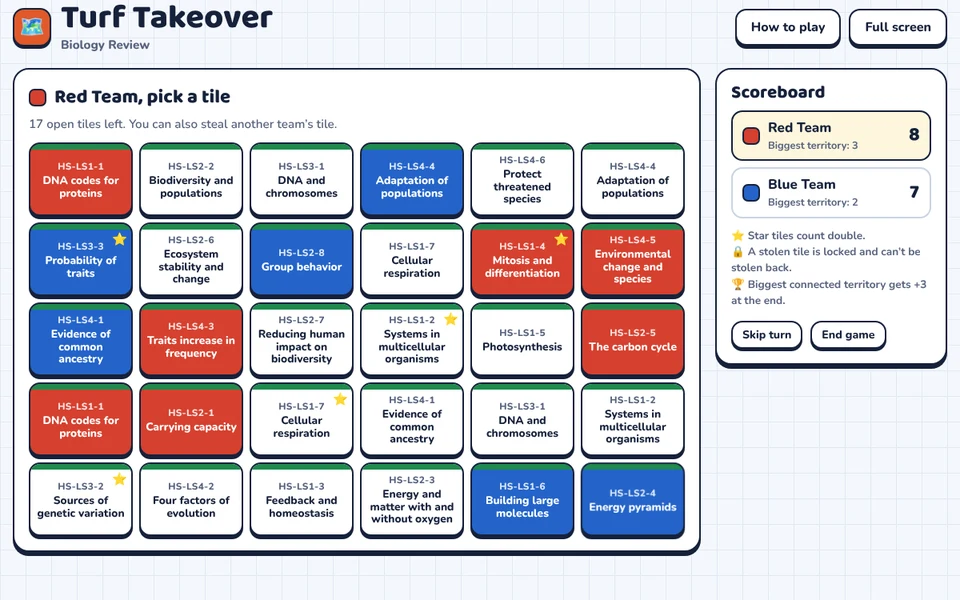
A team review game for every NGSS Biology standard. Teams claim tiles on a map by answering questions, and can steal each other's tiles. Play a full review or pick the standards you want. The results show % correct for each standard.
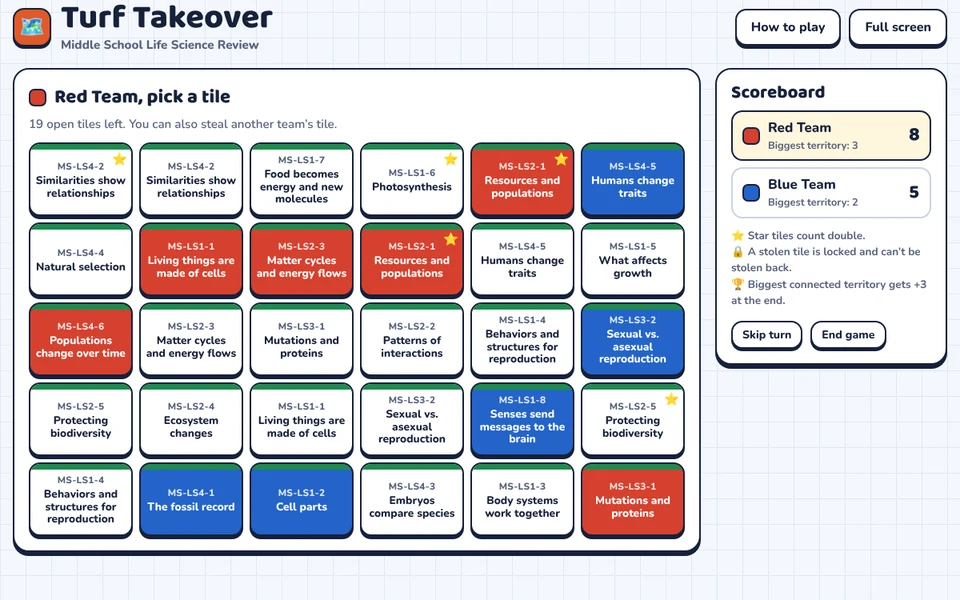
A team review game for every NGSS middle school life science standard. Teams claim tiles on a map by answering questions, and can steal each other's tiles. Play a full review or pick the standards you want. The results show % correct for each standard.
The All-Access Teacher License includes every game, every grade and all future games.